The 1991 Gulf War Oil Spill stands as one of the most devastating environmental disasters in modern history, a deliberate act of environmental warfare that left a permanent mark on the Persian Gulf ecosystem. The incident occurred during the final stages of the 1990-1991 Gulf War, triggered by Iraq’s invasion of Kuwait in August 1990.
As a coalition force led by the United States advanced to liberate Kuwait, Iraqi forces executed a scorched-earth policy, intentionally opening valves at oil terminals and dumping crude oil into the Gulf, while simultaneously setting hundreds of Kuwaiti oil wells ablaze.
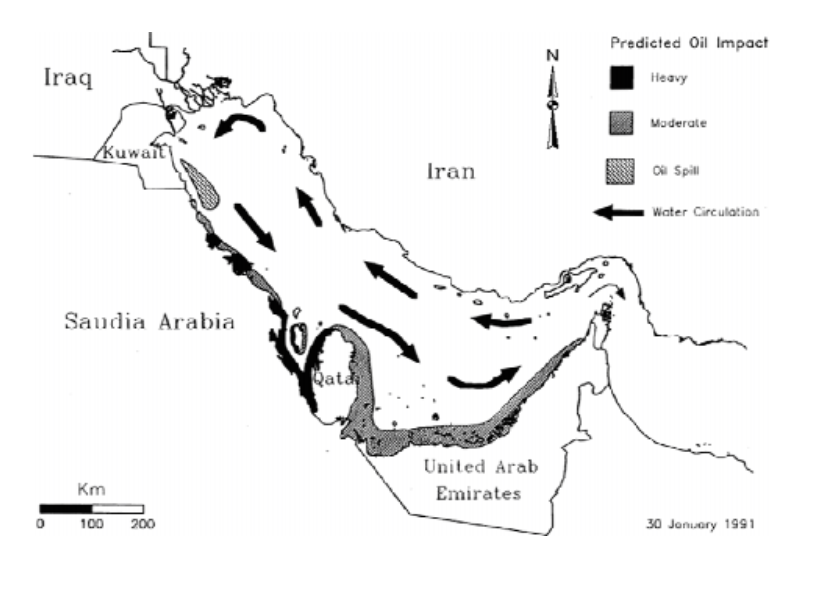
An improved RST approach for timely alert and Near Real Time monitoring of oil spill disasters by using AVHRR data.
The 1991 Gulf War Oil Spill : A Catastrophic Event
In January of 1991, the Iraqi army began deliberately dumping oil barrels into the Persian Gulf as an attempt to stop the landing of US marine forces on the shores. The implications of the oil release were massive, and the action is now considered an act of environmental terrorism that continues to plague the marine ecosystem.
The scale of the spill was staggering and immediate. Initial estimates by researchers suggested a release of approximately 6 to 8 million barrels (roughly 252 million to 336 million gallons) of oil into the marine environment, making it the largest oil spill in history by volume.
The deliberate nature of the spill created a massive slick that rapidly spread across hundreds of square miles of the Persian Gulf, threatening marine life and coastal habitats across the region, particularly in Saudi Arabia and Iran.
“approximately 6 to 8 million barrels (roughly 252 million to 336 million gallons) of oil into the marine environment, making it the largest oil spill in history by volume”.
The immediate environmental destruction was devastating. The sheer volume of oil overwhelmed the marine ecosystem, contaminating vital coastal areas. The burning oil wells simultaneously created massive smoke plumes that obscured the sun for months, depositing soot across a vast area.
The coastal contamination was severe, especially impacting intertidal zones, mangrove forests, and extensive salt marsh areas that are crucial habitats for local wildlife and migratory birds.
The oil coated everything it touched, suffocating organisms and creating what many described as a black, lifeless landscape. The immediate consequences highlighted the vulnerability of the region’s unique and sensitive marine environment to human conflict and emphasized the long-term challenges of environmental recovery and restoration.
While many clean-up efforts began immediately, the full extent of the damage required decades of study and conservation efforts.
“The oil coated everything it touched, suffocating organisms and creating what many described as a black, lifeless landscape”.
War Pollution Wrecks Marine and Coastal Life
The 1991 Gulf War oil spill caused immediate and extensive damage to the Persian Gulf’s sensitive marine and coastal ecosystems, leading to significant short-term biodiversity loss and devastating the livelihoods of local fishing communities. The spill impacted over 700 km of coastline, primarily in Saudi Arabia and southern Kuwait, as the oil slick moved south with the prevailing currents.
Severe Damage to Marine Life and Coastal Habitats
The oil heavily impacted intertidal zones, including mangroves and salt marshes, with approximately half of the mangrove and salt marsh vegetation in affected areas suffering damage or destruction. In heavily oiled marshes, less than 1% of the plants survived the initial contamination.
The physical nature of the oil was a major factor in the destruction, as it coated vegetation and penetrated deep into the sediment, suffocating organisms and creating a barrier to oxygen and water exchange.
While other habitats like seagrass beds and most coral reefs initially escaped direct surface oil contamination, the overall marine ecosystem suffered heavily. The oil slicks and associated temperature changes in the water, as well as reduced light penetration due to the widespread smoke plumes from the burning oil wells, were deleterious to marine life.
Marine Fauna Among the First Victims of the Disaster
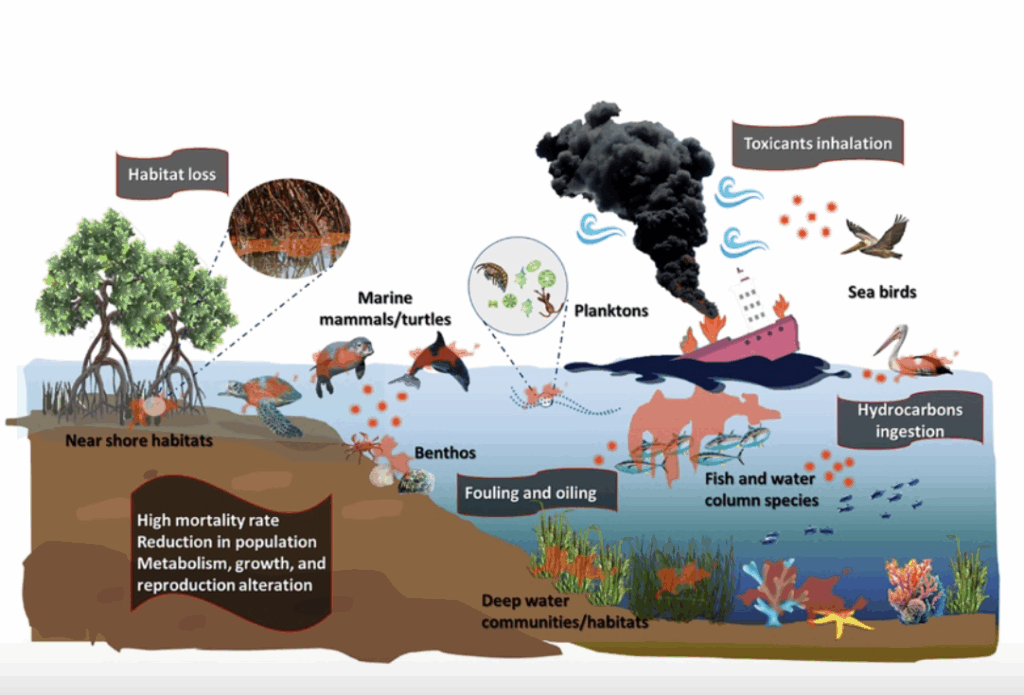
Birds: An estimated 20,000 to 30,000 seabirds, including endemic Socotra cormorants and grebes, died from oiling, which coated their feathers and caused drowning or exposure.
Fish and Prawns: Fish and prawn populations were severely affected, reaching their lowest levels in 1993, two years after the spill. Prawn landings in Saudi Arabia, a major commercial activity, dropped dramatically.
Other Wildlife: Endangered species like sea cows (dugongs) and hawksbill turtles were put at significant risk, with oil damaging critical nesting grounds. The oil killed a significant percentage of intertidal macrofauna, including crabs, amphipods, and molluscs, with some areas experiencing 50-100% mortality of key species.
“An estimated 20,000 to 30,000 seabirds died from oiling”.
Immediate Blow to Local Livelihoods
The devastation of marine and coastal biodiversity had a direct and immediate impact on human livelihoods. Fishing in heavily affected areas was halted, and an estimated 10,000 tons of fish were deemed unsuitable for human consumption shortly after the spill.
The damage to fishing equipment and infrastructure, combined with the collapse of fish and prawn stocks, resulted in substantial economic losses for local communities, with the Saudi fishing industry heavily affected and unable to operate in the war zone for nearly a year.
Long-Term Ecological Damage Still Unfolding
A major factor in the enduring impact is the persistence of oil in sediments. In low-energy environments like salt marshes and sheltered mudflats, the lack of wave action and oxygen has significantly hindered the natural degradation of the trapped oil.
This oil can penetrate deep into the substrate, sometimes over 30 cm, where it weathers into a highly toxic, anoxic “asphalt pavement”. This reservoir of persistent oil can re-release hydrocarbons into the water column over time, causing chronic, sub-acute toxicological effects on the marine life that remains.
A Slow Recovery for Fragile Ecosystems
The recovery rate of various ecosystems has been highly variable. Mangroves and Salt Marshes: These critical habitats suffered severe initial damage, with approximately half of the mangrove vegetation in affected areas destroyed.
While some studies noted significant natural regeneration of mangroves within two years, with over 90% recovery by 1995 in certain spots, other long-term assessments indicate that full recovery of salt marshes may take decades due to the persistent oil mats and altered soil conditions.
Also, coral reefs: Most coral reefs and seagrass beds generally escaped direct surface oil contamination due to their depth, but some studies noted potential indirect effects such as reduced light penetration from smoke and possible localized toxicity, though no significant damage was widely reported.
Heavy Toll on Migratory Birds and Wildlif
long-term effects on populations are more complicated. While local populations of wintering waders and cormorants showed a general increase in subsequent years, largely due to many birds dispersing from oiled areas rather than perishing, some population dynamics were altered for years.
The spill also put pressure on endangered species like dugongs and hawksbill turtles, impacting critical nesting grounds and potentially leading to lower hatching success rates for turtles. The bioaccumulation of hydrocarbons in fauna, such as sand lizards in terrestrial areas affected by oil lakes, was observed for several years after the incident, demonstrating persistent toxic threats across the food web.
The ongoing presence of oil in the environment continues to pose a challenge to the full recovery of the region’s unique biodiversity.
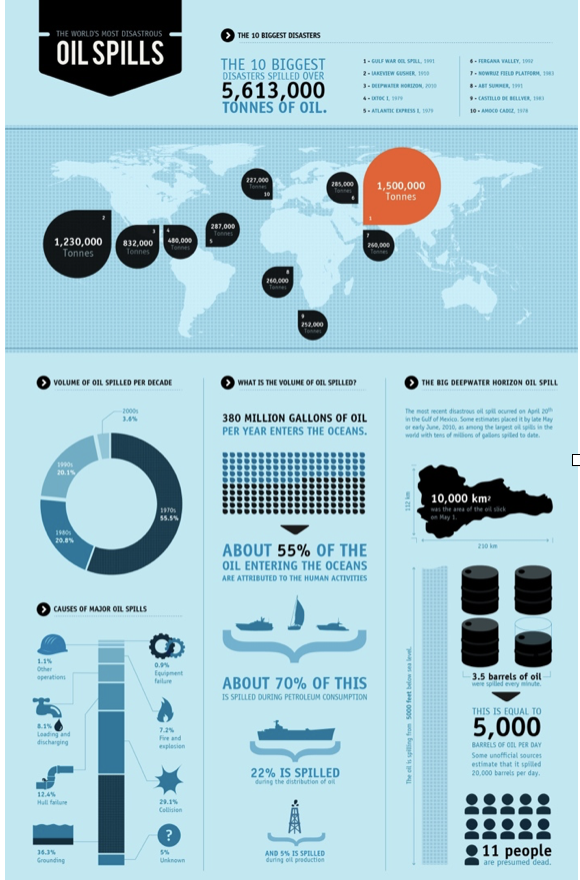
The Global Impact of Oil Spills on Oceans, Wildlife, and Coastal Communities
Coastal Erosion and Desertification Take a Heavy Toll.
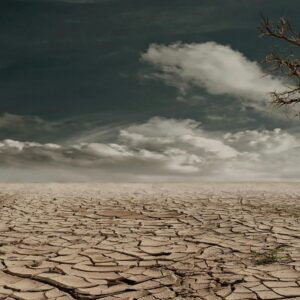
The Persian Gulf is warming at nearly twice the global average rate, leading to increased sea surface temperatures, higher evaporation rates, and chronic water scarcity on land. These rising temperatures influence the fate and toxicity of residual oil. Higher temperatures also increase the toxicity levels of certain oil compounds to marine life.
Furthermore, reduced precipitation and increased drought conditions, which are exacerbated by climate change, deplete water resources and can lead to more frequent and intense dust storms, further stressing compromised coastal areas.
Oil Pollution Intensifies Climate Change Impacts
- Oil contamination severely degrades critical coastal habitats, fundamentally weakening natural defences against climate extremes.
- Loss of Stabilizing Vegetation: Oil penetrates sediments and kills root systems of essential salt marsh and mangrove plants. These root systems are crucial for binding soil and stabilizing shorelines.
- Accelerated Erosion: The loss of this belowground biomass causes soil strength to decline significantly, making shorelines highly susceptible to erosion. Studies following oil spills show that erosion rates in oiled marshes can double, and this land loss is accelerated during storm events. The physical destruction of these natural buffers means that rising sea levels and more intense coastal storms (exacerbated by climate change) pose a greater threat to both remaining ecosystems and human infrastructure.
Climate Extremes on the Rise
Damaged coastal habitats lose their ability to provide ecosystem services, such as wave dampening and carbon sequestration. Mangroves and seagrass beds are vital “blue carbon” sinks, and their degradation reduces the region’s capacity to absorb CO₂, thus exacerbating regional climate impacts.
The combination of a historically polluted environment and ongoing climate change means the Persian Gulf’s unique and sensitive ecosystems are less resilient to future extreme weather events, creating a cycle of environmental degradation that poses significant risks to biodiversity and human security.
The Role of Science and Technology in Monitoring and Restoration
From Space to Earth: Satellites Transform Environmental Research
Remote sensing technology was crucial for assessing the damage caused by the spill and the burning oil wells. During the conflict, commercial satellite imagery and data from systems like Landsat Thematic Mapper (TM) and AVHRR were utilized to detect, map, and track the movement of the oil slick across the Persian Gulf.
This provided situational awareness that manual overflights could not achieve and offered a “bigger picture” for responders and scientists. These technologies provided critical data for locating oil recovery equipment, assessing the total area covered by the slick, and monitoring the gradual recovery of vegetation around oiled terrestrial “oil lakes” in the subsequent years. The use of satellite data has since become a standard and essential tool in oil spill disaster management worldwide.
Tech to the Rescue: Advances in Bioremediation and Ecosystem Recovery
The spill prompted the development and refinement of remediation strategies specifically adapted for the Gulf’s unique environment. Bioremediation, the use of naturally occurring microorganisms to break down hydrocarbons into less toxic compounds like carbon dioxide and water, was a key technique.
Landfarming and Composting: For heavily contaminated soil on land, cost-effective methods like landfarming (spreading soil out and tilling it with fertilizer and compost) and windrow composting were employed to enhance microbial activity and degradation.
Coastal Restoration: For coastal zones, restoration efforts focused on stabilizing shorelines and re-establishing habitats. The transplantation of mangrove saplings and the creation of artificial reefs were implemented, which not only helped to restore the physical habitat but also supported the return of burrowing animals and other marine life. These field trials were crucial for refining future remediation designs and ensuring sustainability.
Three decades on, the scars of the 1991 Gulf War oil spill are still visible, coastlines scarred, ecosystems struggling, and livelihoods disrupted. This disaster was not just a local tragedy; it sent ripples across the region, a stark reminder of how war and environmental neglect intertwine.
As climate change accelerates, the lesson is clear: protecting the environment must be part of every conflict prevention and recovery plan. The Gulf’s waters may recover, but the memory and the warning lingers.
Copyright © 2026 Blue Tunisia. All rights reserved.