Coral bleaching is the process where corals transform from their normal vibrant colours to white due to environmental stress causing the coral to expel the symbiotic algae living on its tissue. Most commonly, this occurs when water temperatures rise and an increase of only a few degrees Celsius for a short amount of time can cause significant damage.
The algae, called zooxanthellae, and the corals have a mutually beneficial relationship where the corals provide a protected habitat and essential nutrients and in return, the corals feed off the algae through photosynthesis, the basis of 90% of the coral’s energy.
Corals in the Red Sea have been typically regarded as exceptionally resilient to warmer temperatures however, recent increases in water pressure have led to some of the first occurrences of coral bleaching, causing significant concern over the wellbeing of this coral ecosystem and highlighted the new extremes that aquatic life must adapt to.
Threats Loom Over the Red Sea’s Coral Oasis
A Once-Resilient Marine Biodiversity Hotspot
The Red Sea coral reefs are some of the most unique coral ecosystems in the world, boasting vibrant biodiversity and a strong resilience to most of the recent environmental changes. The area host over 346 species of hard corals and around 6% of these are not found anywhere else on earth.
The uniqueness of these coral systems is a result of warmer temperatures, healthy levels of salinity and low wave action which ensure the area is hospitable for the development and protection of these endemic corals.
“The area host over 346 species of hard corals and around 6% of these are not found anywhere else on earth”.
These areas are not only home to hundreds of species of coral but also over 1,700 species of shallow fish, 1,000 species of invertebrates and countless more endemic and non-endemic species that thrive in this unique ecosystem. In fact, the Red Sea possesses one of the highest rates of endemism in the entire world with roughly 13% of all fish species being endemic to the area as well.
The perfect and unique conditions lead to such impressive rates of endemism and therefore, any changes to these conditions may harm the biodiversity and risk the existence of numerous endemic species.
Fortunately, the coral species in the area are considered particularly resilient to changes in the ocean temperature meaning many marine biologists view the area as a critical ‘thermal refuge’ where corals and species thrive in temperatures that have harmed other ecosystems across the globe.
Why Red Sea Reefs Are Among The Strongest On Earth?
The key to understanding the resilience of Red Sea reefs seems to be in their past and, in particular, their migration to first inhabit the red sea area. It is believed between 10,000 and 20,000 years ago hundreds of species of coral slowly migrated from the Indian Ocean to the Red Sea due to a rise in sea levels. During the journey, the corals would have been subjected to varying temperatures meaning some species will have died off during the migration and the strongest will have reached the hospitable and calm waters of the Red Sea.
Of particular focus is the portion of the journey that will have passed through the Bab-el-Mandeb strait, that flows between Yemen and the nations of Djibouti and Eritrea, where the coral species would have endured significantly higher temperatures, possibly up to 32o degrees Celsius.
Anders Meibom of the Laboratory for Biological Geochemistry at the Ecole Polytechnique Fédérale de Lausanne, theorises that during this portion of the migration the corals adapted to surviving at higher temperatures meaning that when they eventually settled in the northern Red Sea basin, the slightly lower temperatures of 27o to 28o degrees provided ideal conditions for the growth and survival of these coral species.
It is believed that this ability to survive at higher temperatures has been retained among coral species, leading to the exceptional resilience seen among the reefs when the Red Sea temperatures rise a few degrees Celsius. It is hoped that this ability to survive the rising sea temperatures could be the key to protecting coral reefs globally if it can be harnessed.
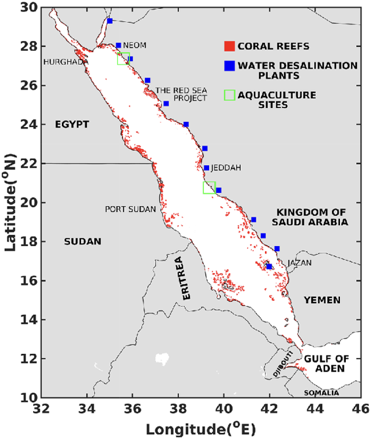
Map depicting key coral reef areas in the Red Sea.
Alarming Signs of Stress Across the Region
Despite this resilience, coral reefs in the Red Sea are now struggling and areas of coral bleaching have been witnessed in the region for the first time. During a heatwave in 2024, some of the species of so-called ‘super corals’ bleached as sea temperatures rose to unprecedented levels. Approximately 5% of coral studied has experienced some level of bleaching during this period and while many recovered, a few reefs died as a result.
“During a heatwave in 2024, Approximately 5% of coral studied has experienced some level of bleaching during this period and while many recovered, a few reefs died as a result”.
This alarmed many scientists who had long believed that coral systems resilience to higher temperatures would provide a form of immunity to the bleaching witnessed in other coral systems due to increased sea temperatures. Most corals will begin to expel the essential algae at a 1-2o degree increase in ocean temperature, but Red Sea corals can withstand up to 5o degree increase before bleaching.
However, an increased frequency of marine heat waves is now testing the coral’s ability and will likely lead to many more occurrences of bleaching in the Red Sea as heat waves will increase in severity and duration.
Increased water temperatures are not the only factor contributing to coral bleaching, and pollution has largely been blamed for a reduction in the Red Sea reef’s resilience. According to the Coral Research and Development Accelerator Platform, pollution from land-based sources is now the top threat facing over 30% of coral systems around the world.
Pollution poisons the nutrients and sediments that provide for coral reefs, decreasing their overall health and making them far more susceptible to bleaching during times of extreme weather events.
Rising Risks for Middle East Coral Reefs
Rising Sea Temperatures: The Primary Driver Of Bleaching
The immediate cause of bleaching is an increase in water temperature which causes the coral to expel the essential algae that it feeds off and exposing the white bone of the coral. At this stage the coral is not dead and can recover if temperatures decrease and allow a return of the vital algae.
However, many corals starve during this period as they lose their main source of energy and marine heat waves now last longer and are hotter, resulting in more extreme consequences for the bleached coral. Studies have shown that sea surface temperature across the region has actually been rising at a higher rate than the global average which poses an increased risk to coral reef systems in the region.
This rise in temperature has been most extreme in the Arabian Gulf where the average increase per decade is currently estimated at 0.59odegrees; almost twice the global average and, as a result, coral reefs in the Arabian Gulf are experiencing higher occurrences of bleaching compared to the Red Sea.
Additionally, the region suffers from intense marine heatwaves, and as the global occurrences of such heat waves are increasing in frequency and duration, the coral reefs are prevented from healing after suffering from bleaching. Marine heatwaves are expected to continue intensifying until at least 2100 and will likely lead to a mass die off of even the most resilient coral species during these periods.
“Marine heatwaves are expected to continue intensifying until at least 2100 and will likely lead to a mass die off of even the most resilient coral species during these periods”.
Mega-Resorts and Dredging Intensify Pressure on Gulf and Red Sea Reefs
long with the damage done by increased water temperature, human activity in areas of coral ecosystems have drastically destroyed much of the habitat or significantly altered the conditions of the water that the systems live in. Massive infrastructure projects in both the Gulf and the Red Sea have contributed to the direct destruction of coral reefs.
Swift and largely unregulated development along the Gulf coast have led to massive areas of coral reefs being completely destroyed by construction such as the Palm Jumeriah in Dubai that caused a loss upwards of 90% in coral cover in the affected area.
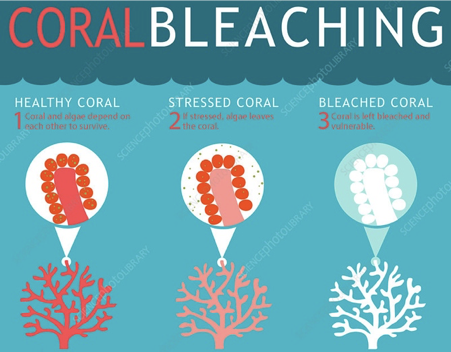
Rising ocean temperatures are causing corals to bleach.
National Oceanic and Atmospheric Administration.
“Swift and largely unregulated development along the Gulf coast have led to massive areas of coral reefs being completely destroyed by construction such as the Palm Jumeriah in Dubai that caused a loss upwards of 90% in coral cover in the affected area”.
Development of the gulf coastline involves significant dredging where sediment and debris is excavated from the bottom of the sea to ensure ease of passage for boats passing through the gulf and for the development of infrastructure on the seabed. Dredging and the subsequent turnup of sediment is extremely harmful to coral reef systems as sedimentation leads to a reduction of oxygen and increase in the presence of toxic substances.
The fine silt and sediment that is extracted during dredging may eventually cover the corals which starves them of essential nutrients and can cause the corals to die. Furthermore, Saudi Arabia is developing numerous luxury ‘giga-projects’ which involve the construction of a range of tourist destinations, such as resorts, marinas and more, along the Red Sea Coast.
These development projects will lead to significant damage to the Red Sea coral systems as construction will invade and destroy certain areas of coral habitat and increased dredging and pollution will massively alter the composition of the Red Sea’s water.
Plastic, Wastewater and Toxic Pollution on the Rise
Construction projects and general poor management of marine pollution and waste cause significant harm to the coral systems as the presence of rubbish and debris has increased in the region. Areas of coral reefs with a high concentration of plastic rubbish exhibited increased rates of damage and disease. Plastic poses physical risks to the coral as it can damage the coral through cuts and physical abrasions on the coral’s surface, leading to a risk of infection.
A study by Ithica University found that in areas free from plastic pollution the corals only had a 4% chance of developing an infection but in areas with a presence of plastic waste, the infection rate increased to 89%. The MENA region has the highest per capital footprint of plastic leakage to the marine environment in the world, significantly increased the risk of infection among the region’s coral reefs.
“In areas free from plastic pollution the corals only had a 4% chance of developing an infection but in areas with a presence of plastic waste, the infection rate increased to 89%“.
In addition to this, wastewater causes enormous harm to coral systems and is another reason for suffering coral reefs in the region. The introduction of wastewater to a coral system brings with it additional nutrients such as nitrogen and phosphorus which lead to a rapid growth in algae that lives on the surface of coral. The increased growth of algae suffocates the coral by consuming much more oxygen and blocks vital sunlight from reaching the coral and interrupting the regular process of photosynthesis.
Furthermore, wastewater significantly alters the composition of the sea water and has numerous adverse effects on coral reefs systems. In areas such as the Red Sea, which is host to hundreds of endemic species, maintaining similar and consistent water conditions is essential to protecting these species that can only survive in these unique circumstances.
Chemical pollutants are released into coral ecosystems through both industrial activity and the spread of more common products into the sea. The release of oil into a coral reef system is especially damaging as it coats the coral and prevents any reproduction of the species.
Other chemicals such as mercury and lead are spread among coral systems through the similar processes that release oil, such as spills and marine transportation, and these damaging chemicals remain in the corals ecosystem for prolonged periods contributing to a progressive decline in coral health.
Key ingredients in sunscreen, such as oxybenzone and octinoxate, also linger in coral systems after being released into the sea and damage the coral even if present at only low concentrations.
Anchoring and Overfishing Ravage Fragile Marine Habitats
nchoring and overfishing both contribute to the global decline in coral reefs through direct damage and reducing the reefs resilience to changes in the climate. Anchoring in coral areas lead to extreme physical damage as the heavy anchor and chains break and destroy delicate corals. A single anchoring can cause massive amounts of damage to coral areas and as corals take a long time to grow, it can take years or even decades for the coral to fully recover.
As a result, areas experiencing frequent anchoring occurrences exhibit long-term damage and stunted growth. One study found that hard corals in such areas were 40% smaller in surface area and 60% less dense.
The majority of maritime authorities in the Middle East enforce strict anchoring restrictions to protect coral areas, for example designated anchoring areas have been set up in the Gulf to ensure anchoring is only performed above sandy areas and in the Red Sea, buoy systems have been established to prevent boat operators from damaging the coral reefs.
Coral systems are delicate ecosystems that depend on every component to provide and sustain the overall ecological health of the area. Herbivorous fish consume algae growing on the coral and act as natural cleansers by regulating the growth of algae and preventing the corals from becoming smothered or restricting their access to sunlight. Furthermore, the removal of predatory fish changes the delicate local ecosystem by altering the balance of fish populations and lead to the unregulated growth of other species of fish.
Overfishing is extremely damaging to the mutually beneficial ecosystem and leads to the starvation or suffocation of corals. Overfishing in the area is accompanied by unsustainable fishing practices such as blast fishing which, although illegal, still occurs in areas with little maritime law enforcement. This involves the destruction of reef structures with explosives and inflicts irreparable damage to corals and fish populations.
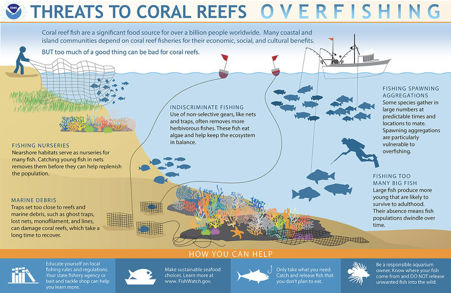
National Oceanic and Atmospheric Administration.
Why Gulf Corals Are Dying Faster Than Expected
Coral reefs in the Gulf are struggling with the extreme changes in the environment combined with increased local stressors from human activity.
Sea surface temperatures in the Gulf are increasing at a higher rate than the global average and marine heatwaves are particularly damaging to the coral systems. After bleaching of coral reefs, most are able to survive but only on the condition that water temperatures decrease and the vital algae returns to sustain the coral. However, recent marine heatwaves have lasted longer which starve the corals for an extended period of time and massively affects the ability to heal after the heatwave.
During a marine heatwave in 2017, corals were forced to exist in conditions above average bleaching temperatures for over two months; with two weeks spent over lethal temperatures. This prolonged process of bleaching severely damaged corals in the Gulf and prevented a healthy healing process leading to an increased mortality rate among corals during this time. Marine heatwaves such as this example are increasing in frequency in the Gulf leading to a rise in coral bleaching and mortality rate as a result.
Coastal development in the Gulf is also contributing to increased coral deaths in the region. Urban growth has been exceptionally swift along the Gulf coast leading to mass coral death and destruction of ecosystems which decrease populations of fish and coral.
Studies indicate that the historical extent of corals in the Gulf was roughly 3800 Km2 however, up to 70% of this coral is now considered dead. This indicates an extreme ecological disaster in the Gulf region and significantly alters the ability for all species to survive in the increasingly hostile conditions.
“Studies indicate that the historical extent of corals in the Gulf was roughly 3800 Km2 however, up to 70% of this coral is now considered dead”.
Development has led to coral areas being manually destroyed to make way for infrastructure projects and the increased creation of pollutants has suffocated fish and coral populations leading to ecosystem collapse at a rate faster than other coral reefs.
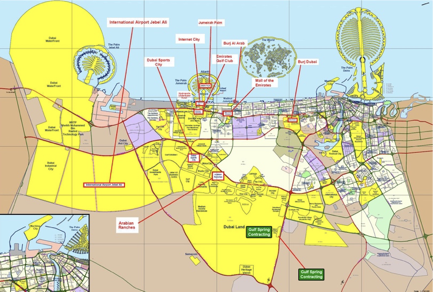
Map showing the numerous infrastructure projects that are built into the sea in Dubai.
Scientific Warnings: What The Latest Data Shows?
Recent mass bleaching events have caused global alarm for the future of coral reefs as areas are increasingly susceptible to changes in the marine temperature and fears grow that future heatwaves will be more extreme. Over the past decade and a half there have been numerous mass bleaching events, each more severe that the last.
The International Coral Reef Association estimated that in 2010, during the mass bleaching event of that year, 37% of the worlds coral reefs were impacted by ‘bleaching-level heat stress’.
This figure increased to 68% in the bleaching event from 2014-2017 and further jumped to 84% between 2023-2025. This unprecedented rise poses massive risks to global reef systems as marine heatwaves become ever more extreme. Formally resilient reef systems, such as those in the Red Sea, have begun to be affected by these global bleaching events and studies suggest that their damage will notably increase in the coming decades.
Models indicate that annual severe bleaching events will begin in 2034. This model has scheduled the onset of these events years earlier than previous models due to the increased occurrence and damage inflicted by recent mass bleaching events. An annual occurrence of such events will massively damage reefs across the world including those in the Red Sea that have previously avoided mass bleaching events.
The likelihood of this is massively dictated by the rate of temperature increase in the world’s oceans.
A warming of around 1.5o Celsius will result in at minimum, under current projections, the death of 70% of the world’s coral reefs by 2100. However, if this increase is to reach 2o Celsius then approximately 99% of coral reefs are expected to die. This mass extinction would affect Red Sea corals as their ability to withstand increased temperatures has already been diminished and a mass die off of global reefs will likely collapse the ecosystem supporting the reefs survival.
“A warming of around 1.5o Celsius will result in at minimum, under current projections, the death of 70% of the world’s coral reefs by 2100…if this increase is to reach 2o Celsius then approximately 99% of coral reefs are expected to die”.
The Economic Toll on the Region
Rising Threats Jeopardize Marine Tourism
Many areas around the Red Sea depend on the survival of the natural habitat to sustain the local tourist economy which benefits off the many tourists travelling to the area to enjoy the beauty of the coral reefs.
Resorts on the south of the Sinai peninsula such as in Sharm-el-Sheikh will be massively affected by the disappearance of coral systems and significantly reduce the amount of capital being contributed to the area due to tourist contributions. Sharm-El-Sheikh is an important contributor to Egypt’s $14 billion industry with much of the appeal of the region coming from the natural beauty of the Red Sea reefs and the diving opportunities.
A disappearance of these reefs will lead to tourists abandoning Sharm-El-Sheikh for other diving destinations and likely damage the tourist industry in the region. A report by Marine Policy estimated an annual loss of $1.77 billion as a direct result of environmental degradation. This is due to tourists leaving the area in search of healthier marine biodiversity and poses risks to the Egyptian marine tourism industry as a whole.
Fisheries and Local Livelihoods in Decline
Fisheries provide the livelihoods for millions of individuals around the world and corals are essential to maintaining a sustained level of fish population. As corals die and disappear, so too do the fish species that depend on them, leading to severe consequences for global livelihoods and food security.
Around the globe, roughly 500 million people depend on coral reefs for food and income meaning the likely mass extinction of coral reefs in the near future will have dire economic consequences for many. The death of coral reefs will coincide in the death of millions of fish that feed off the reefs and deteriorate the food security for many nations as fisheries’ input will collapse.
A mass die off of coral reefs will significantly impact aquatic ecosystems around the world and many industries will have to adapt to harsher conditions as a result.
“Around the globe, roughly 500 million people depend on coral reefs for food and income meaning the likely mass extinction of coral reefs in the near future will have dire economic consequences for many”.
This problem will be acutely felt in the Gulf where fisheries are at particular risk due to the destruction of coral reefs. It is expected that this destruction will reduce the future fish catch potential by 26% in Qatar and the UAE. As fisheries yield less return, competition over prime fishing locations will grow fiercer and firstly, contribute to a swifter decline in fish population in these areas and secondly, contribute to international disputes over maritime jurisdiction.
What Countries Are Doing: Conservation Efforts And Gaps
There are notable attempts across the region to try and slow the catastrophic death of coral reefs however, all these projects face tough challenges and must work quickly before the damage is too severe to reverse.
The NEOM infrastructure project in Saudi Arabia has partnered with The King Abdullah University of Science and Technology to advance a massive coral restoration project. The project aims to restore and sustain a coral reef system covering an area of 100-hectares in the Red Sea. The main approach involves the construction of large-scale nurseries on land which have the ability to produce up to 400,000 corals per year.
It also involves the planting of corals onto the natural reef to boost coral growth and healing. It is a massive undertaking that is hoped to heal coral ecosystems; not only in the area that is being developed but across the whole Red Sea.
In addition to this, the Abu Dhabi Coral Restoration Project has been launched to rebuild damaged coral habitats. The project aims to restore coral environments stretching over 1,200 Km2 across coastal waters. The main process involves the placement of artificial reefs that are designed to withstand higher sea temperatures in the area to encourage the growth of resilient coral on these reefs, with over 40,000 having been placed already.
The project has initially shown remarkable success, following a huge increase in biodiversity in the area after just six months. These areas saw a mass influx of fish and other aquatic life to the area and encouraging the development and growth of resilient coral as a result.
However, Both these projects face considerable difficulties, as the marine climate is constantly changing, forcing the conservation efforts to frequently adapt to the new conditions in order to ensure long-term coral growth.
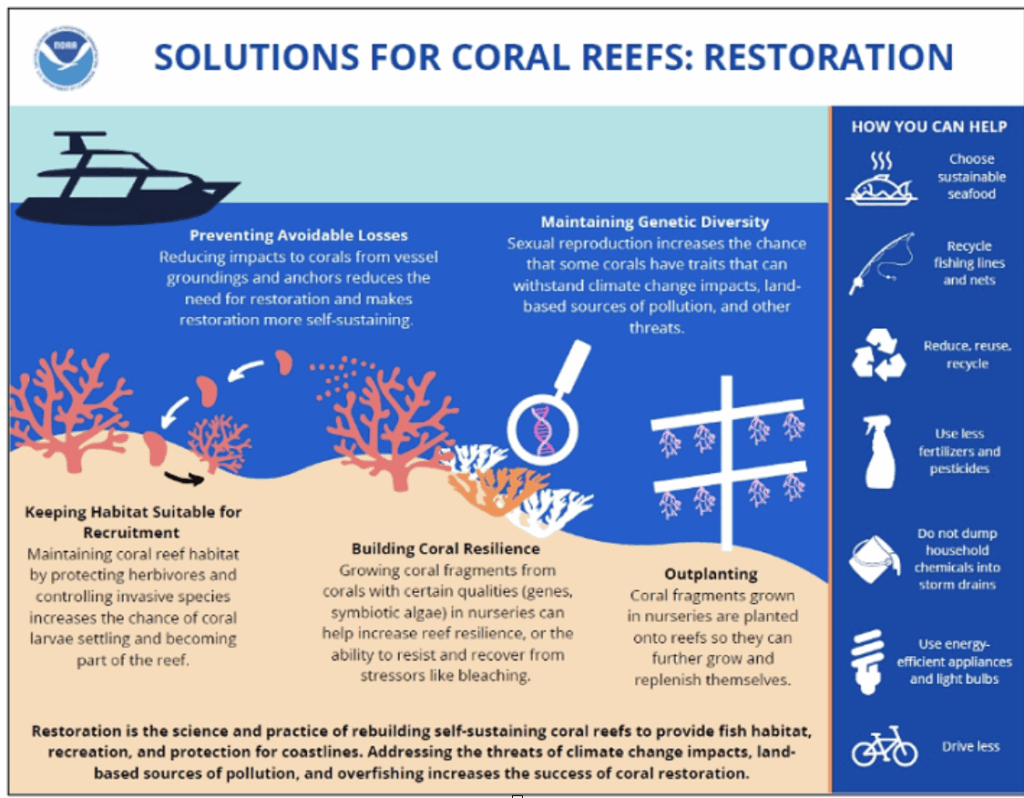
Notable methods for coral reefs restoration.
National Oceanic and Atmospheric Administration.
nnovative Solutions: Can Science Save The Reefs?
Numerous cutting-edge projects are searching for new and unorthodox ways to assist in the protection of coral reefs. These methods may become key to the reefs survival as extreme changes in the planet’s climate forces the corals to adapt to the harsher conditions.
One method is by changing the structure and DNA of corals to implant the ability to withstand higher temperatures. By altering the inner structure of the coral, scientists hope that the reefs will develop a stronger resistance to the rising ocean temperatures and be more likely to survive marine heatwaves.
Furthermore, other techniques to encourage growth, such as coral IVF, are being utilised globally to increase reproduction among coral reefs. These techniques are especially effective as their use on only a small portion of coral can spread and improve coral in the entire area. For example, those working to restore corals have seen positive growth in 50% of coral ecosystem after only targeting 3% for restorative initiatives.
Other key initiatives aim to change the environment that the coral exists in. There are numerous methods that are used to try and reduce the temperature of the water in reef areas or reduce the severity of marine heatwaves. One technique is called ‘cloud brightening’ and has been used by researchers to help protect areas of Australia’s Great Barrier Reef.
This technique involves the spreading of microscopic particles in the clouds above a coral area. These clouds develop and thicken which casts a shadow over the corals and prevents the sea from being heated up by the sun, which is especially important during heatwaves that cause coral bleaching. This method could be extremely useful in protecting coral reefs in the Middle East as hotter, drier summers are expected in coming years and protecting the seas from the intense sun heat could prove key to preventing coral bleaching.
Coral reefs are an essential and unique part of marine ecosystems, and the threat of their destruction is a major concern for the wildlife that live among the coral and the people that depend on the corals in some way for their livelihood. While corals globally have been at increased risk for years, the recent coral bleaching events in the Red Sea have caused alarm as the most resilient coral reefs are now unable to withstand the damage caused by ever warming seas. Unless major initiatives are introduced to revitalise and protect corals, then annual coral bleaching events will cause a significant decay in marine life.
Copyright © 2026 Blue Tunisia. All rights reserved.