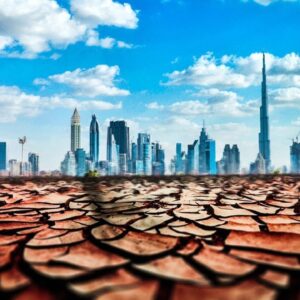
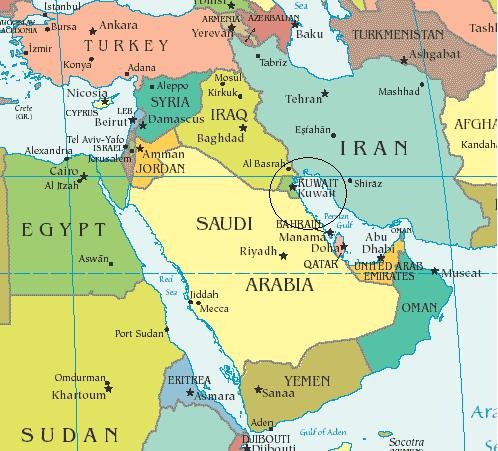
Kuwait is one of the smallest countries in the Middle East, covering less than 18,000 square kilometers. It is also one of the hottest. Summer temperatures regularly exceed 45°C and can surpass 50°C during heatwaves. Its hyper-arid desert climate leaves the country highly exposed to extreme heat and prolonged drought. With limited land, Kuwait cannot afford further desert expansion driven by climate change. Even slight temperature increases can push conditions closer to the limits of human survival. At the same time, Kuwait’s economy remains heavily dependent on oil, complicating efforts to transition to cleaner energy.
Kuwait Faces Surging Heat and Record Temperatures
Extreme heat is reshaping daily life in Kuwait. When temperatures exceed 50°C, normal routines break down. Energy demand surges as cooling becomes essential. The human body struggles to regulate heat, increasing health risks. Even basic outdoor tasks become dangerous, and construction work can nearly stop. Authorities enforce a summer midday work ban to protect workers, yet heat-related illnesses still rise. Outdoor laborers remain the most exposed, with injury rates peaking in extreme heat. The threat is growing. By the end of the century, temperatures could rise by around 5°C, pushing conditions from extreme to potentially deadly.
“By the end of the century, temperatures could rise by around 5°C, pushing conditions from extreme to potentially deadly.”
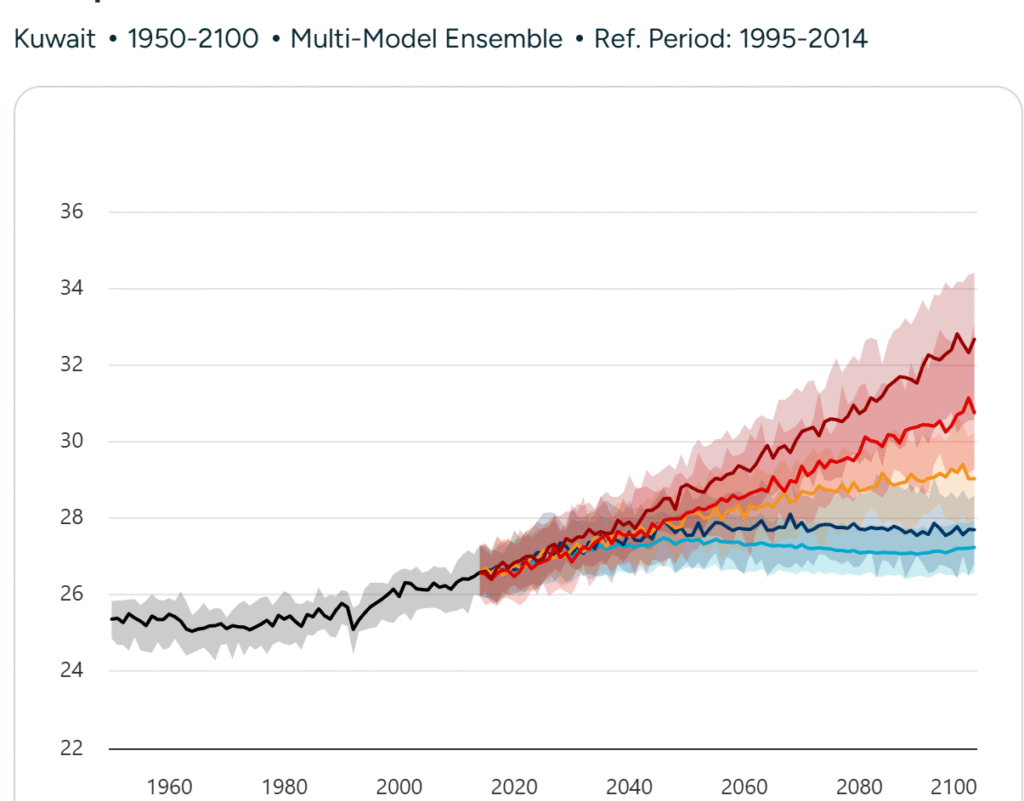
(Climate Change Knowledge Portal).
Kuwait Faces Rising Water Scarcity and Desalination Pressure
A Worsening Cycle of Water Scarcity in Kuwait
Kuwait relies heavily on desalination for its water supply. Around 90% of water consumption comes from seven major desalination plants. The country depends almost entirely on seawater, which is becoming warmer and more saline. Its hyper-arid climate limits rainfall, making groundwater difficult to replenish. Climate change is intensifying water stress across the system.
Around 90% of water consumption comes from seven major desalination plants.
Desalination is highly energy-intensive and depends largely on fossil fuels. Kuwait’s energy system is still heavily oil-based, making the process costly and carbon-heavy. Desalination alone accounts for a significant share of national oil use for power generation . This creates growing economic pressure as demand increases.
At the same time, climate change worsens the challenge. Rising ocean temperatures and shifting currents increase salinity, making desalination even more energy-demanding. Extreme weather also threatens infrastructure. Groundwater reserves continue to decline. This creates a reinforcing cycle: more desalination leads to higher fossil fuel use, which accelerates climate change and further deepens water stress.
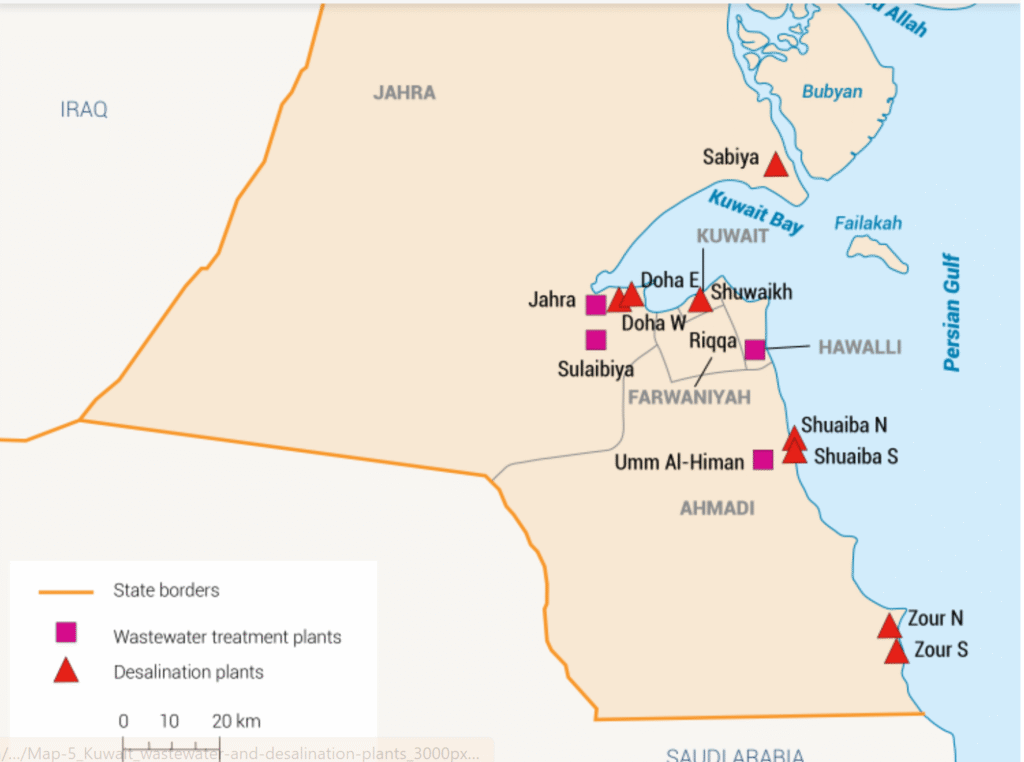
(Fanack Water)
The Environmental Cost of Rising Climate Pressure in Kuwait
Kuwait’s desalination plants discharge highly saline brine back into the sea. This harms marine ecosystems along the coast. It damages habitats and reduces biodiversity. The process also undermines its own water source over time.
As ocean conditions degrade, desalination becomes more energy-intensive and costly. The system grows increasingly unsustainable. By 2050, energy use for desalination could rise sharply, with projections suggesting it may reach up to 50% of oil consumption for water production. This highlights the urgent need for alternative water solutions.
“By 2050, energy use for desalination could rise sharply, with projections suggesting it may reach up to 50% of oil consumption for water production.”
Air Pollution Is Deepening Kuwait’s Climate Vulnerability
Air pollution is a growing public health crisis in Kuwait. Children, the elderly, and people with existing conditions face hundreds of preventable hospitalizations each year. Studies on air quality highlight high levels of particulate matter in the atmosphere. These pollutants increase respiratory and cardiovascular diseases, especially in children under 15.
Kuwait ranks among the worst countries globally for air quality. Real-time data has placed Kuwait City as one of the most polluted cities in the world, with Air Quality Index levels often nearing 200, considered unhealthy to very unhealthy. Oil and gas production are major contributors to this decline. Gas flaring, the burning of excess natural gas during extraction, releases toxic pollutants and greenhouse gases. Although Kuwait Oil Company reduced flaring from 17% in 2005 to under 1% in 2020, industrial emissions remain a key driver of pollution.
Rising temperatures worsen the situation by trapping smog near the ground and accelerating chemical reactions that form it. Climate change also intensifies dust storms, as hotter and drier conditions loosen soil and increase airborne particles. Droughts, heatwaves, and shifting weather patterns all amplify these events, deepening health risks across the country.
Kuwait’s Coastline Is Slowly Disappearing
Rising Sea-Level Threats in Kuwait
Rising sea levels are a major climate risk for Kuwait. The country is flat and low-lying, with most population centers and key infrastructure located along the coast. Gulf states are projected to see a sea-level rise of 14–16 inches by 2050, threatening critical coastal oil facilities.
“Gulf states are projected to see a sea-level rise of 14–16 inches by 2050, threatening critical coastal oil facilities.”
Around 40% of Kuwait’s coastline is developed, and more than 90% of the population lives near the shore (Springer). This concentration increases exposure to flooding and coastal erosion. Compared to other Gulf countries, Kuwait’s flat terrain makes it especially vulnerable to water intrusion across large areas.
Ports, cities, and industrial zones are all at risk from rising seas and storm surges. Climate pressure is forcing a difficult shift, pushing development away from the coast into harsher inland desert areas.
Rising Water Risks in Kuwait
Coastal erosion is a major threat to infrastructure in Kuwait. Some parts of the coastline are eroding at rates of up to 23.45 meters per year, according to remote sensing analysis. This puts critical infrastructure such as desalination plants, oil refineries, and ports at risk. Relocation or shoreline restoration would be extremely costly. Losing desalination capacity would further strain the country’s water supply.
Residential areas are also highly exposed to storm surges and flooding. Rising sea levels combined with stronger storms increase the risk of destructive waves and flash floods. Cities struggle to manage heavy rainfall due to outdated drainage systems and limited flood preparedness. Areas like Sabah Al-Ahmad have already experienced severe flooding after rain events.
A national adaptation plan includes measures such as inland channels, mangrove planting, and artificial islands. However, these solutions remain untested at scale, and their long-term effectiveness is still uncertain.
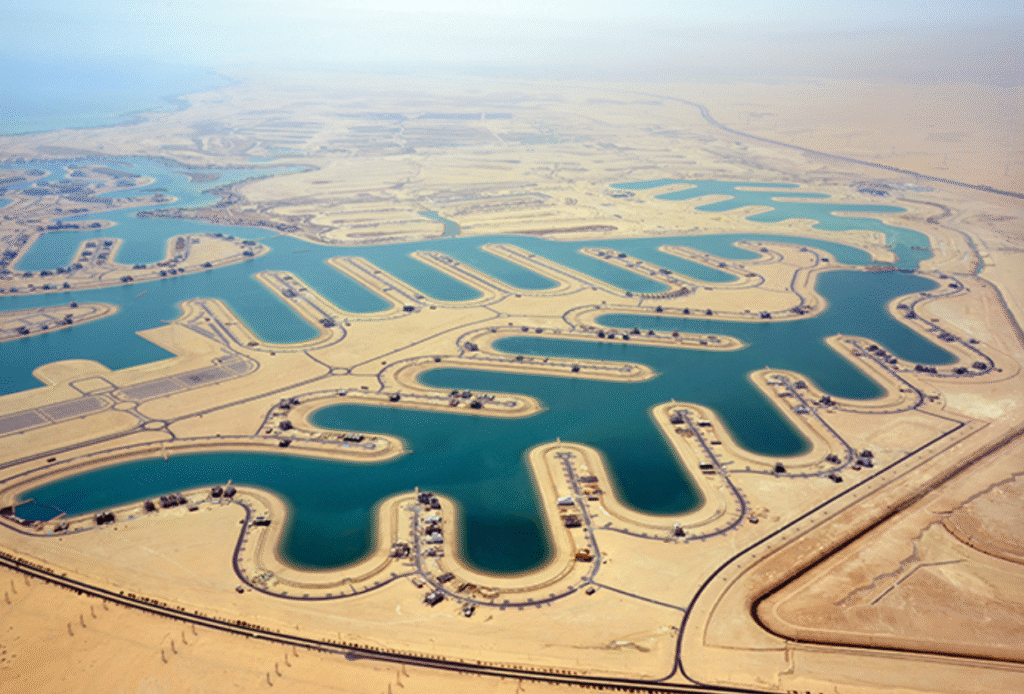
Kuwait’s National Climate Adaptation Efforts
Kuwait’s Climate Commitments and Net-Zero Goals
Kuwait faces a tough climate balancing act. The oil-rich nation depends on fossil fuel exports for about 90% of government revenue. Yet, its Nationally Determined Contribution (NDC) targets a 7.4% emissions cut by 2035 through unconditional national efforts, spanning 2015-2035.
Modernization drives the push forward. Kuwait plans future projects with lower emissions in mind. At COP28, it pledged net-zero in the oil and gas sector by 2050 and across all other sectors by 2060.
Still, challenges loom large. Heavy reliance on fossil fuels for economy and energy makes full transition hard to picture.
Kuwait’s climate goals clash with oil dependence, targeting 7.4% emissions cuts by 2035 and net-zero by 2050-2060 amid modernization efforts.
Shagaya Solar Power: Kuwait’s Push for Renewable Energy by 2030
The Shagaya energy park is the biggest renewable energy facility in the country, containing almost 35,000 solar panels, each with a 160-watt capacity. In addition to the wind and steam turbines, this facility is a central part of Kuwait’s plan to generate 15% of its energy from renewable sources by 2030. In practice, reaching that goal would require more facilities of similar magnitude to reach the lofty goal.
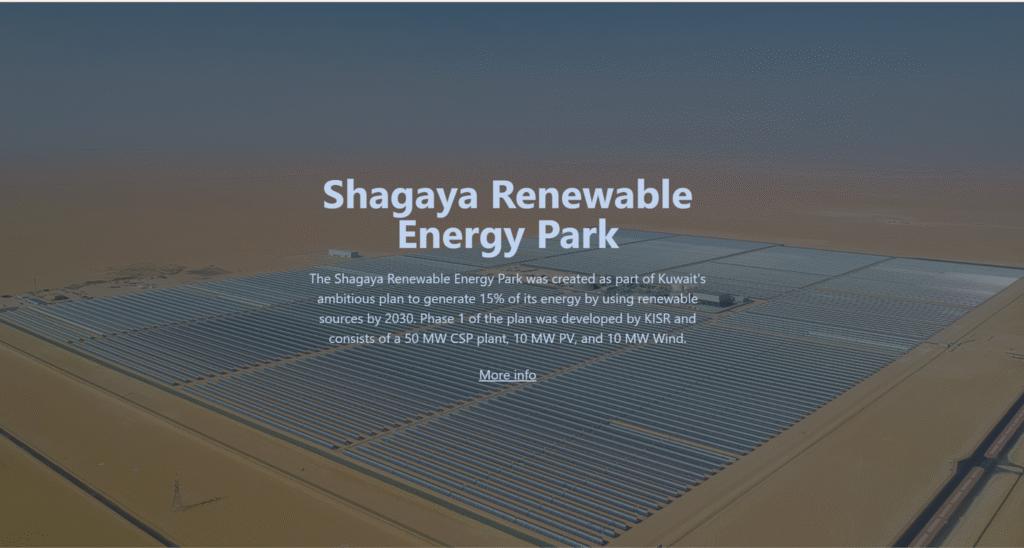
Kuwait’s Energy Policy Shift: From 15% by 2030 to 30%
Dr. Mashan Al-Otaibi, the Director General of the Kuwait Institute for Scientific Research, announced in a speech that Kuwait is working to update regulations for the new energy goals. These goals attempt to double renewable energy production from 15 to 30 percent by 2030, then to 50 percent by 2050. According to Al-Otaibi, this effort comes with introducing some policies that would provide advantages to curb the growing demand for energy.
Additionally, the plan increases energy efficiency, with a goal of reducing overall energy consumption by 10 percent by 2030 compared to 2020. The overall legal framework for environmental action in Kuwait is still developing, but there is no single consolidated law. Kuwait currently lacks a comprehensive, unified environmental law—instead, environmental regulations are scattered across multiple agencies and ministries, creating coordination challenges in efforts to reach the 30% goal.
The Hidden Barriers to Kuwait’s Energy Transition
The largest obstacle for the implementation of energy goals is the institutionalization of reliance on fossil fuels. Fiscal incentives continually push Kuwait to oil-friendly policies, making it difficult for regulators to effectively limit emissions. Bureaucracy also presents difficulty; multiple different agencies and legislative processes are required in order to create environmental regulations, which makes the whole process very slow, despite governmental statements in support of climate goals. Additionally, the scale at which they are trying to undergo an energy transition would be challenging for any nation, let alone one as fossil fuel reliant as Kuwait.
Human Dimension: How Communities and Everyday Life Are Transformed
Through the Kafala system, migrant workers dominate the workforce in Kuwait, making up over 70% of the workforce. In labor-based jobs, migrants make up an even higher percentage of the workforce. These jobs can be dangerous, overworking migrants in high-heat situations, leading to increased hospitalizations.
WHO
Migrant workers face major heat-related risks when working in hot months. They are asked to work outside for hours at a time, and despite midday work bans, the extreme heat still makes working conditions unsafe. Heat-related hospitalizations skyrocketed during the summer months.
The most vulnerable group, migrant workers, has a significant increase in injury risk. According to a 2023 study, during the summer months of June, July, and August, 7.2, 7.6, and 9.4 injuries were reported per day, and many more were potentially unreported (Climate Health). The numbers show that the current regulations, like the midday work ban, are simply not sufficient to protect workers from rising heat. As the temperature gradually increases, the heat risk continues to rise.
Non-Migrants will also suffer from increasing heat. The cost of living will rise due to expensive energy and water use. Despite energy being heavily subsidised, home cooling is already a major family expense in the summer months, costing more than 20 KWD a month. A price increase would be a burden that the government or citizens would have to bear. A 5°C rise in average temperature by the end of the century would compound that expense, making it an untenable number for lower-income individuals who already dont have adequate cooling.
Despite being among the world’s most at-risk populations from climate change, the Kuwaiti public action and threat perception remain limited. Wealthy and influential Kuwaiti’s are bolstered by the nation’s oil wealth and have little reason to worry about the increasing expenses or heat threats.
Lower-income residents like migrants are the ones who are truly at risk, but they don’t have the wealth or political capital to make a large impact– they are mostly worried with their day-to-day struggles. Internal skepticism about reaching environmental targets is only confirmed by the slow pace of visible change. Oil fields are still operating as the primary source of wealth in the nation; nearly every wealthy Kuwaiti owns a car or multiple, the nation maintains a large reliance on oil, and there are few real signs of institutional change.
Can Kuwait Navigate a Warming Future?
Kuwait finds itself at a crossroads; it has the economic potential to reform the country, building clean energy and a water-reliant society. However, so much of their economy is dependent on the very fossil fuels that cause global warming and climate change.
In order to have a successful transition, Kuwait has to toe the line between creating renewable energy for a healthy future and not totally ruining the economy as it is today. Increasing heat and sea level rise put enormous pressure on the nation to make these hard choices, balancing spending on clean energy and increasing desalination infrastructure, with maintaining the economic output to support those projects.
However, many of the migrant workers can’t afford to wait for a slow transition. The increasing temperatures and desert storms make daily life difficult for everyone, and nearly impossible for laborers or those who work outside. The Kuwaiti government needs to work on solutions that support those people now, not just long-term economic projects for an ambitious energy transition that will likely take decades.