Why Environmental Research Matters Now?
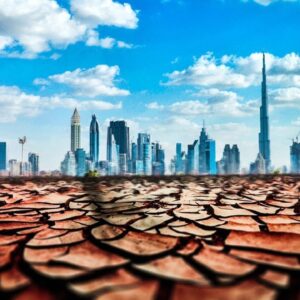
The Middle East is rapidly approaching a climate tipping point. Temperatures are rising at twice the global average, with heatwaves now exceeding 50°C. The region is increasingly exposed to extreme heat, prolonged drought, and more frequent, intense dust storms. Water sources are shrinking fast, as lakes, rivers, and reservoirs continue to dry up.
“Temperatures are rising at twice the global average, with heatwaves now exceeding 50°C.”
Projections show water storage will decline sharply under all major warming scenarios. In response, countries across the region are beginning to shift away from oil and invest in environmental research to confront the crisis.
Studies warn that the Middle East is nearing dangerous climate tipping points, sometimes described as “Climate Point 1,” where only a fraction of the region could remain habitable without major intervention. This is no longer a distant scenario. Human activity, especially fossil fuel use, groundwater depletion, and pollution, drives nearly 80% of the risk. At the same time, environmental threats are converging.
“Human activity, especially fossil fuel use, groundwater depletion, and pollution, drives nearly 80% of the risk.”
Extreme heat, severe water scarcity, desertification, and ecosystem collapse are accelerating together. Several countries already extract more water than nature can replace, while droughts grow longer and harsher. Rising humidity and temperatures are also pushing beyond human tolerance limits, making outdoor work increasingly impossible. The message is clear. Urgent, science-based solutions and stronger investment in environmental research are now critical to the region’s survival.
Inside the Middle East’s Environmental Research Landscape
The Middle East is rapidly scaling up investment in environmental research. Saudi Arabia alone has raised its R&D budget to $6 billion, an increase of nearly 18%. Leading institutions such as King Abdullah University of Science and Technology and Qatar Environment and Energy Research Institute are expanding funding and infrastructure to accelerate climate-focused innovation.
Research priorities are also shifting. In desalination studies, nearly a quarter of regional research focuses on energy efficiency, highlighting efforts to reduce dependence on fossil fuels and optimize resource use.
“Saudi Arabia alone has raised its R&D budget to $6 billion, an increase of nearly 18%.”
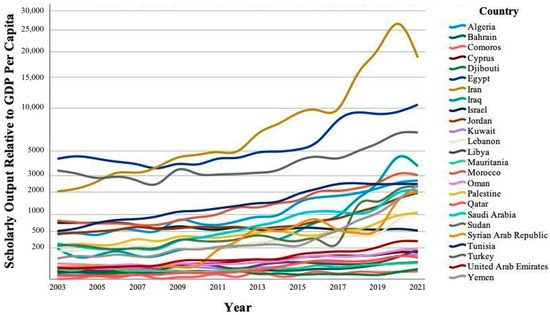
Environmental research in the Middle East remains narrowly focused. Most efforts target urgent needs such as water scarcity through desalination and climate-resilient agriculture to secure food and water supplies. Yet major gaps persist. Climate modeling, ecosystem protection, and effective climate governance remain underdeveloped.
Funding is also uneven across the region. Wealthy Gulf states invest heavily, backed by oil revenues, while many other countries lack the financial capacity to scale research. Even in high-income nations, spending remains modest relative to GDP. Across the board, greater investment is needed. Limited regional cooperation and rising climate risks make stronger, more coordinated research efforts essential.
Where Environmental Research Matters Most in the Middle East?
Critical Knowledge Gaps in Environmental Research
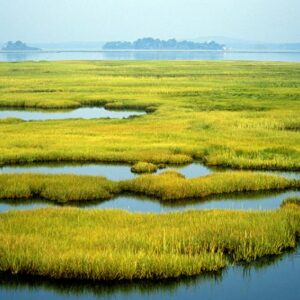
Environmental challenges are escalating across the Middle East, with water scarcity emerging as the most urgent concern. In Iraq, more than 500,000 Marsh Arabs have been displaced in recent years as drought intensifies and flows from the Tigris and Euphrates rivers decline.
The region has responded with major investment in solutions. Saudi Arabia and other Gulf states lead global desalination efforts, accounting for around 40% of worldwide production through more than 400 plants. Saudi Arabia alone is the world’s largest producer, expanding capacity to 8.5 million cubic meters per day following an $80 billion investment.
Despite these advances, major knowledge gaps remain. Research into ecosystem adaptation and decarbonization is still limited. Marine habitats across the region are under severe stress, with studies in the Arabian Gulf projecting up to 35% species loss by 2090 compared to 2010, underscoring the urgent need for deeper ecological research and long-term climate planning.
“Marine habitats across the region are under severe stress, with studies in the Arabian Gulf projecting up to 35% species loss by 2090 compared to 2010, underscoring the urgent need for deeper ecological research and long-term climate planning.”
The Middle East’s Shift Toward Clean Energy
The energy transition is a key focus of environmental research across the Middle East. Decarbonization and renewable energy development are central to climate solutions, yet progress remains uneven. Fossil fuel dependence continues to drive pollution, worsening air quality and intensifying heatwaves. It also accelerates climate change, sea-level rise, and ecosystem stress across the region.
Governments increasingly recognize the need for transition, but research into viable pathways remains limited. In Saudi Arabia, for example, renewables accounted for only about 2% of electricity generation in 2024 despite ambitious targets. The scientific and economic roadmap to large-scale clean energy remains uncertain.
Where Climate Innovation Is Working in the Middle East
Saudi Arabia’s Coral Science Success Story
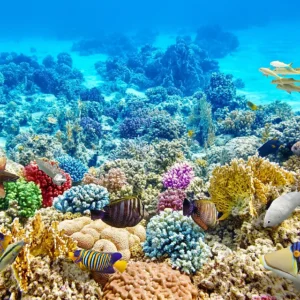
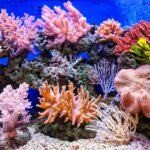
In Saudi Arabia, researchers at King Abdullah University of Science and Technology are reporting promising progress in coral science. Teams studying the Red Sea have identified coral colonies with higher thermal resistance, making them more resilient to rising ocean temperatures.Building on this discovery, scientists are testing “assisted evolution” techniques to strengthen other coral populations. Although still in early stages, the research offers hope for improving reef survival during increasingly extreme heat conditions.
Climate-Smart Agriculture Breakthroughs in the UAE
In the United Arab Emirates, the International Center for Biosaline Agriculture is advancing climate-resilient food systems.Rising soil and water salinity has pushed researchers to develop salt-tolerant crops. Quinoa has emerged as a key solution. Scientists identified optimal genotypes that can withstand heat, drought, and saline conditions.
This breakthrough strengthens food security and supports further innovation in hydroponics and aquaculture.The institute is now expanding into brine-based aquaculture systems. Using desalination byproducts, researchers achieved fish densities of tilapia more than three times higher than previous cycles.These developments could reduce pressure on wild fish stocks and help protect marine ecosystems by limiting harmful overfishing practices.
Key Challenges Facing Environmental Researchers in the Middle East
Researchers face a steep hill of challenges. From funding challenges to political instability, researchers struggle to find an environment to complete their work, often resulting in brain-drain out of the region.
How Finance Constraints Limit Climate Science in the Middle East
Middle Eastern nations have competing incentives, often resulting in limited funding for environmental research projects. Climate change is devastating for nations, with sea-level rise, heatwaves, and water scarcity all creating real human and economic risks.
However, investment in solutions like clean energy can be directly harmful to many nations that rely on oil as their primary source of exports and economic output. Oil incentives have resulted in some of the wealthiest nations, like those in the Gulf, refusing to fully commit to environmental research, despite lofty environmental goals.
Poor Middle Eastern nations aren’t much better off. Despite sizable amounts of international climate research funding, many nations haven’t created infrastructure for research and development. This can be attributed to debt traps that these nations find themselves in, often owing more money to the international community than they receive in funding.
When climate funding comes as loans, small or poor nations don’t have the capacity to pay them back. Research by Oxfam and CARE Climate Justice Centre found that developing countries in the middle east now paying more back to wealthy nations for climate finance loans than they receive. For every 5 dollars in climate funding received, they are paying 7 dollars back due to interest on the loans.
Missing Data Blocks Climate Research Progress in the Middle East
A major obstacle to environmental research in the Middle East is the lack of data transparency. Few countries have formal data-sharing agreements with research institutions, limiting access to reliable government datasets.There is also no unified regional database for environmental information. As a result, researchers often depend on fragmented local sources to identify broader trends.This slows down research timelines and makes large-scale climate analysis more difficult and less efficient.
Brain Drain Threatens Long-Term Climate Research Capacity
Environmental research in the Middle East is increasingly affected by brain drain. Skilled scientists and researchers often migrate to North America and Europe in search of better opportunities. This steady outflow of talent disrupts long-term scientific progress. Environmental research requires stability, expertise, and sustained collaboration. However, these conditions are difficult to maintain when researchers frequently leave. Factors such as limited opportunities, political instability, and challenging research environments continue to drive this migration.
The Research to Policy Gap in Climate Action
A major challenge in climate science across the Middle East is the research-to-policy gap. This refers to the difficulty of translating scientific findings into government action and effective policy.While this issue exists globally, it is particularly strong in the region’s climate research landscape. Communication is a key barrier. Research is often published without clear pathways to policymakers. As a result, scientific findings may not reach decision-makers or influence policy decisions, limiting their real-world impact.
The Silo Problem in Middle East Climate Decision-Making
A major barrier to climate action in the Middle East is the “silo effect.” It describes a breakdown in communication between sectors, where researchers, policymakers, and media operate in isolation. This weak coordination limits collaboration and slows environmental decision-making.
Researchers often publish findings without clear channels to reach government actors, especially at higher levels.Media coverage of climate issues exists, but it rarely connects scientific results to policy implications. At the same time, decision-makers may prioritize economic and political concerns over research-based recommendations. The issue is not only political. Academia and research institutions also struggle to translate findings into actionable policy guidance.
Initiatives such as the “Arab Leadership Dialogue on Science Advice” aim to close this gap by improving communication between scientists and policymakers. The challenge is less about disregard and more about the lack of structured interaction.
The Future of Climate Solutions in the Middle East
Despite major challenges, environmental research in the Middle East is entering a phase of rapid innovation. Countries such as United Arab Emirates and Saudi Arabia are leading advances in desalination and solar energy, positioning themselves at the forefront of water scarcity solutions.
There is growing potential for cross-border cooperation. Regional initiatives can help scale solutions for shared water challenges and improve distribution efficiency across countries. One example is the Blue Peace Middle East Initiative, which promotes water cooperation between Iraq, Jordan, Lebanon, Turkey, and Iran.
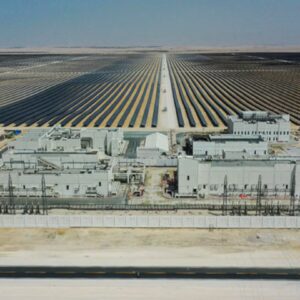
In energy, desert environments offer strong conditions for wind and solar research. Integrated water and energy systems are also expanding. In Dubai, large-scale desalination projects using reverse osmosis aim to power 100% of water production with clean energy and waste heat by 2030.
“In Dubai, large-scale desalination projects using reverse osmosis aim to power 100% of water production with clean energy and waste heat by 2030.”
The Red Sea region also presents new research frontiers. Priorities include coral reef protection, biodiversity conservation, coastal erosion control through mangroves and artificial structures, and reducing marine pollution.
While many research barriers exist, both the need and the will to continue environmental reserach is strong. Nations need strong research to properly adapt to climate change conditions like global warming, sea level rise, and water scarcity. Nations increasingly recognize that water security, livable cities, and successful economic diversification are dependent on research, and in many cases have given ample funding for these initiatives.
Environmental progress across the field remains uneven. Some areas like desalination technology and renewable energy are advancing rapidly, but others like biodiversity protection, pollution control, and systematic cross-border cooperation remain underdeveloped. There are clear results in areas like coral reef restoration with the KUAST initiatives.
These successes lend credence to the idea that nations could reach their ambitious energy and emissions goals, despite the economic incentives otherwise. The research capacity exists, but what remains to be seen is whether political will, regional cooperation, and economic transition can keep up with accelerating environmental change.
Copyright © 2026 Blue Arabi. All rights reserved.