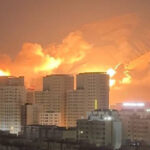
For more than 50 years, the Tunisian Chemical Group (GCT) has operated in Gabès. Over that period, environmental, health and employment concerns linked to the industrial sector have remained a major issue for local residents. On 21 October 2025, more than 100,000 people reportedly took part in a general strike in Gabès called by the Tunisian General Labour Union (UGTT).
Days earlier, dozens of children at a school in Chott Essalem were hospitalised after reportedly experiencing breathing difficulties following exposure to fumes from the GCT industrial complex.The protests called for action on pollution and its effects on the region. One of the main slogans was “Gabès wants to live.”
The protests followed years of government announcements and programmes addressing pollution and industrial activity in Gabès. International funding has also been allocated to environmental and development projects in the region. The key question is why these measures have produced limited changes on the ground, and what policies could address the environmental, health and employment concerns raised by residents.
Why Is the Gabès Crisis Still Unresolved?
Tunisia’s public-finance situation is closely linked to the performance of key export sectors, including phosphate and fertiliser production. Tunisia recorded a trade deficit of 21.8 billion dinars in 2025. The country exported 63.7 billion dinars worth of goods and imported 85.5 billion dinars, according to the National Institute of Statistics.
Phosphate and fertiliser exports have also declined from previous levels. The government’s plans to increase phosphate production could therefore affect export revenues and the trade balance. The impact will depend on factors including international prices, production capacity and export volumes.
These economic considerations are part of a wider debate over phosphate production and environmental management. Previous government plans included measures to reduce or dismantle some pollution-generating units operated by the Tunisian Chemical Group.
The issue extends beyond Gabès. The relationship between industrial production, public finances, employment and environmental impacts provides a broader context for understanding the challenges facing Tunisia’s phosphate-producing regions.
Colonial Legacies: Why Tunisia Depends on Phosphate and Syria on Oil?
Looking beyond Gabès reveals a similar pattern at a wider scale. Tunisia’s phosphate industry was developed during the French protectorate. The Compagnie des Phosphates et du Chemin de Fer de Gafsa was established in 1897.
Its mandate included exploiting phosphate deposits in the Gafsa region and building a railway connecting the mining areas to the port of Sfax. Historical company records confirm that the company was established as a French joint-stock company, with its headquarters in Paris.
The infrastructure created during this period connected phosphate extraction to export markets. More than a century later, phosphate remains an important component of Tunisia’s export economy. The existing production and transport infrastructure also means that increasing output does not require building an entirely new industry from the ground up.
A similar historical trajectory can be examined in northeastern Syria, where oil became a major economic resource. Oil exploration in Syria began during the French mandate, and major oil fields were later developed in the northeast. The region subsequently became part of the territory administered by the Autonomous Administration of North and East Syria, commonly known as Rojava.
The comparison is not about treating phosphate in Tunisia and oil in Syria as identical cases. Rather, both illustrate how natural-resource industries can outlast the political systems under which their infrastructure was first developed.
The question also extends beyond relations between former colonial powers and their former territories. Similar resource relationships can exist within countries, between national centres of political and economic power and resource-producing regions.
The concept of internal colonialism is used by some scholars to describe such relationships. It generally refers to situations in which a dominant political centre exercises economic or political control over a particular region and its resources. The concept remains contested and is applied differently across academic literature.
In Gabès, the Tunisian Chemical Group (GCT) has been central to the region’s phosphate-processing industry for decades. Various national and international programmes have sought to address the environmental impacts associated with its industrial facilities.
The African Development Bank, for example, approved $110 million in January 2026 for the environmental upgrading and rehabilitation of GCT production units in Gabès, Skhira and M’Dhilla. The project is intended to reduce air pollution and improve the environmental and operational performance of the facilities.
This raises a question that requires detailed examination: how have previous environmental investments been implemented, what results have they produced, and how much funding has been allocated to each project?
Answering that question requires access to project budgets, implementation reports, environmental monitoring data and information on GCT’s spending and compliance. Where such information is not publicly available, the effectiveness of individual projects cannot be independently assessed.
For Gabès, the issue is therefore not only the scale of industrial activity. It is also the transparency of the programmes designed to address its environmental impacts, the results they produce, and the mechanisms available to residents and public authorities to monitor them. But in Rojava, the response was different: rather than continuing to demand accountability from a structure that never delivered it, communities began building one of their own.
Democratic Confederalism: When People Govern
Abdullah Öcalan, a founding member and later leader of the Kurdistan Workers’ Party (PKK), encountered the work of American social theorist Murray Bookchin while imprisoned. Bookchin’s theory of social ecology links environmental destruction to social hierarchies and systems of domination.
In March 2005, Öcalan published a declaration outlining the concept of democratic confederalism. The proposal moved away from the objective of establishing an independent Kurdish nation-state and instead advocated a decentralised system of self-government based on local communities.
The model identifies patriarchy as a central form of hierarchy. It links patriarchy with other systems of economic, political and social domination, including capitalism and environmental exploitation.
In Rojava, the Autonomous Administration of North and East Syria has incorporated several of these principles into its political and social structures. Its framework places particular emphasis on local participation, gender equality and environmental policies.
These principles are presented as interconnected rather than separate policy areas. Supporters of democratic confederalism argue that social hierarchies influence relationships between people, institutions and the environment. The model therefore seeks to address political, gender and environmental issues through changes to local governance and community organisation.
The extent to which Rojava’s institutions reflect these principles in practice remains a subject of academic and political debate.
How Rojava’s Democratic Confederalism Works?
During the reconstruction of Kobanî, Dr. Hawzhin Azeez served on the city’s reconstruction board. She has described extensive damage to the city following the fighting. According to her account, up to 95% of buildings had been destroyed.
” Up to 95% of buildings had been destroyed.”
She also reported damage to agricultural land and the destruction of olive, pomegranate and fig trees, as well as livestock. Azeez said the destruction made it difficult for residents to return and rebuild. The governance system developed in the area now administered by the Autonomous Administration of North and East Syria (AANES), commonly referred to as Rojava, is organised across several levels.
At the local level, communes bring together residents in neighbourhoods and villages. These communes are represented in councils at district and regional levels. The system also uses male and female co-chairs for leadership positions. This structure is linked to the administration’s policy of gender parity.
Environmental policy is addressed through local ecological committees and initiatives. One example is the Make Rojava Green Again campaign, established by the Internationalist Commune of Rojava in cooperation with the Ecology Committee of Cizîrê Canton. Its activities have included reforestation, tree nurseries and projects related to water, agriculture and sustainable energy.
The governance model therefore combines local councils with dedicated structures for gender equality and environmental policy.

Rojava has faced significant restrictions on access to international financing. The Autonomous Administration of North and East Syria (AANES) is not internationally recognised as a sovereign state and has faced restrictions on cross-border trade and movement. Its economy has relied on oil revenues, local taxation and tariffs, agriculture, and cooperative economic activity.
Some agricultural cooperatives retain part of their income for reinvestment. According to the Rojava Information Center, some cooperatives allocate around 10% of their income to dedicated reinvestment funds.
Funding for the reconstruction of Kobanî has come from several sources. These have included community contributions, members of the diaspora, non-governmental organisations, government grants and crowdfunding.
Environmental projects have also been developed at the local level. According to accounts of ecological initiatives in Rojava, Kurdish communities organised tree-planting activities between 2015 and 2023. One source reports that around 40,000 trees were planted during this period.
“According to accounts of ecological initiatives in Rojava, Kurdish communities organised tree-planting activities between 2015 and 2023. One source reports that around 40,000 trees were planted during this period.”
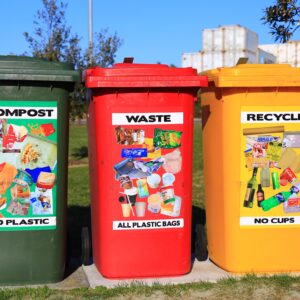
Waste management has been another area of local intervention. Dr. Hawzhin Azeez has described limited waste collection and recycling infrastructure in parts of Rojava before the establishment of the autonomous administration. Local municipalities subsequently created sanitation teams responsible for waste collection and neighbourhood clean-up activities. Recycling initiatives were also introduced in some communities.
Education has accompanied several of these programmes. Tree planting and waste management have been addressed through schools, households and community activities. Azeez has also described educational programmes focused on the political and social history of the region.
According to her account, ideological seminars were organised in schools, families and civil society organisations in the years before the establishment of the autonomous administration. These programmes addressed subjects including capitalism, patriarchy, state institutions and the history of the Kurdish movement.
The implementation of the democratic confederalist model has also involved debates over gender roles. Azeez has described resistance to changes in women’s social and political roles among some members of local communities. Efforts to address this have included discussions with families and groups of men about gender relations and the social effects of patriarchy.
Rojava’s experience does not provide a single model that can be directly transferred to Tunisia. The two regions differ in their political systems, histories, economies and environmental conditions.
The comparison instead raises questions about local participation, community-level environmental management and the role of education in environmental programmes. Any application in Tunisia would depend on local institutions, resources, laws and community priorities.
Azeez has emphasised that developing local participation requires sustained engagement with communities. She describes trust-building as a process requiring time, commitment and continued work.
Jinwar: The Eco-Village Built by Women
Feb 24, 2023
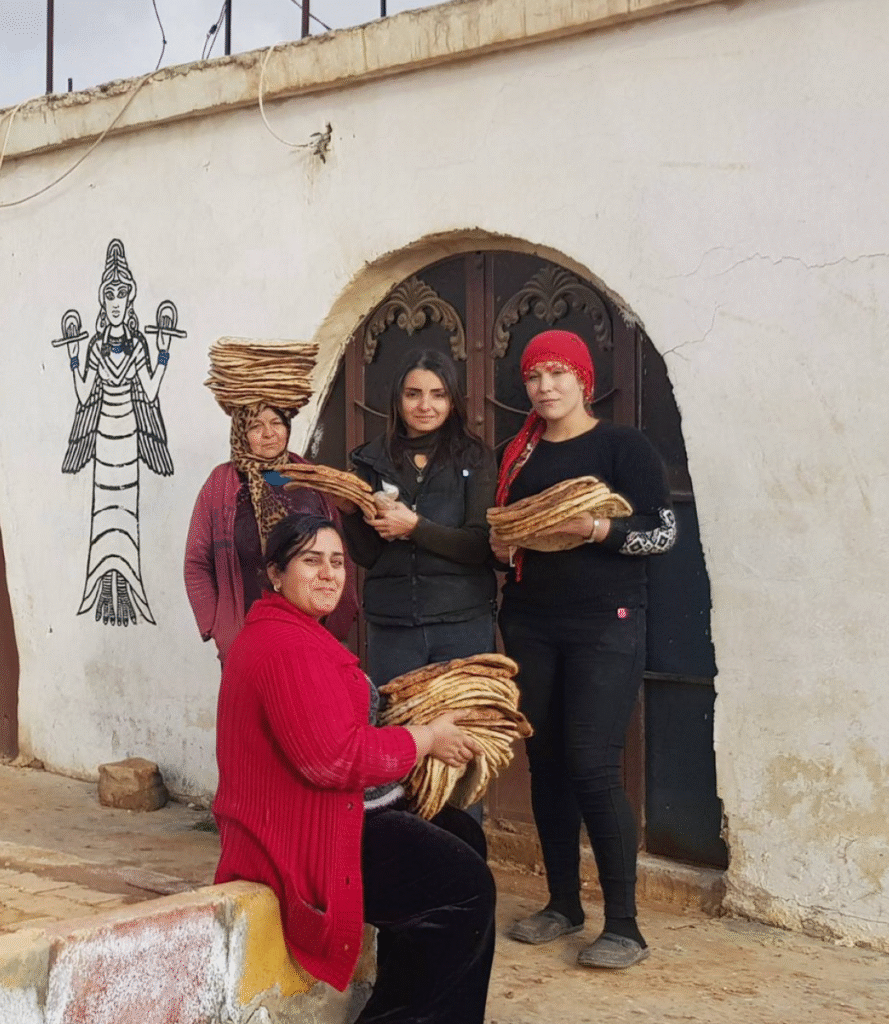
Jinwar is a women-run ecological village in the Cizîrê region of north-east Syria. Planning began in 2016. The project involved Kongra Star, the Free Women’s Foundation, the Jineolojî Academy and the Martyr Families Council. The land had previously been confiscated by the Syrian state. After 2012, it was cultivated by a women’s agricultural cooperative before being allocated to the Jinwar project.
Several organisations were invited to submit designs for the village. The Hevi Foundation, associated with Dr. Hawzhin Azeez, was among them. The design team spent a month documenting traditional villages, interviewing residents about local construction methods and visiting archaeological sites.The final design was circular and based on adobe construction.
Adobe uses materials such as earth, straw and reeds. The team also studied Tell Mozan, an archaeological site associated with the ancient city of Urkesh.
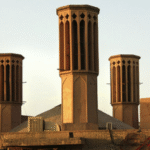
Adobe has been used in the region for thousands of years. Traditional adobe structures can provide thermal insulation, helping regulate indoor temperatures. Their performance depends on construction methods, maintenance and local climatic conditions.
Similar traditional approaches to managing water resources exist in southern Tunisia. Jessour and meskat are systems that use stone terraces and structures to collect and slow seasonal runoff. Research estimates that these systems cover about 300,000 hectares in southern Tunisia, including areas around Mareth in the Gabès region.
Construction of Jinwar began on 10 March 2017. The village opened on 25 November 2018. The dates corresponded with International Women’s Day and the International Day for the Elimination of Violence Against Women.
The village currently includes around 30 homes, a school, bakery, health centre, academy and shop. Women collectively manage the land. Agricultural cooperatives, an orchard and shared livestock form part of the village’s economic activities.
The Hevi Foundation also raised funds to furnish the first 15 completed homes before residents moved in. Azeez has described Jinwar as one of the major projects of her professional work. She said the village provides women with a protected environment and a place to live away from violence.
From Rojava to Tunisia: What Can Be Adapted?
Decentralisation refers to the transfer of administrative, decision-making or financial responsibilities from central government to local or regional authorities. The existence of local councils does not necessarily mean that they have substantial autonomy. Their powers depend on the legal framework, resources and responsibilities assigned to them.
Tunisia introduced a decentralised local-government framework through the 2014 Constitution and the 2018 Local Authorities Code. The framework provided elected local authorities with administrative and financial autonomy. Municipal councils were elected in 2018. Their mandate ended after the councils were dissolved in 2023, followed by the establishment of a new system of local, regional and district councils.
Rojava developed under very different circumstances. During the Syrian conflict, the central government lost control of several areas in northern Syria. Local councils and community organisations subsequently became part of a broader system of self-administration.
The comparison is therefore limited. Rojava’s institutions emerged from a conflict setting and cannot simply be reproduced in Tunisia.
For Gabès, the more relevant question is whether some practices of local participation can be adapted to the region’s own institutional and social context.
Azeez said that this could begin with neighbourhood-level organising, local meetings and information-sharing around existing initiatives. She argued that communities could adapt practices developed elsewhere rather than reproduce them in the same form.
Copyright © 2026 Blue Arabi. All rights reserved.