Egypt is linking sustainable tourism with the protection of its Red Sea coral reefs. Through the Egyptian Red Sea Initiative (ERSI), launched in 2026, the government, UNDP and the Global Fund for Coral Reefs are combining reef conservation, sustainable finance and community-based ecotourism. The initiative aims to reduce pressures on marine ecosystems while supporting tourism and livelihoods along the Red Sea coast.
The Race to Protect the Red Sea
The Red Sea’s coral reefs are among the region’s most important marine ecosystems. They support high biodiversity and underpin tourism, fisheries and other coastal livelihoods. The reefs are also considered among the most resilient to rising sea temperatures, although they remain exposed to climate change and local pressures such as pollution, unsustainable tourism and coastal development.
These pressures have increased the focus on reef conservation across the Red Sea region. Protecting coral ecosystems has environmental as well as economic implications for countries including Egypt, Saudi Arabia and Sudan, where coastal communities and industries depend on marine resources.
Egypt has expanded its conservation measures in recent years. In December 2025, the government officially designated the Great Coral Reef in the Red Sea as a marine protected area under Prime Minister’s Decree No. 4419 of 2025. The designation established a protected zone based on official maps and coordinates and placed the area under additional environmental management requirements.
The Egyptian Red Sea Initiative (ERSI) is part of this broader conservation effort. Launched at COP27 and implemented by the Egyptian government and UNDP with support from the Global Fund for Coral Reefs, the initiative combines reef conservation with sustainable finance and coastal livelihoods. Its measures include strengthening marine protected areas, improving reef monitoring, supporting sustainable ecotourism and developing businesses designed to reduce pressure on coral ecosystems.
ERSI also includes the development of an Egyptian Fund for Coral Reefs and financing mechanisms for reef-positive businesses. The programme is scheduled to run through 2030. Whether these measures can reduce the pressures facing Egypt’s reefs will depend on their implementation, financing and long-term management.
Climate Change Puts Red Sea Coral Reefs Under Pressure
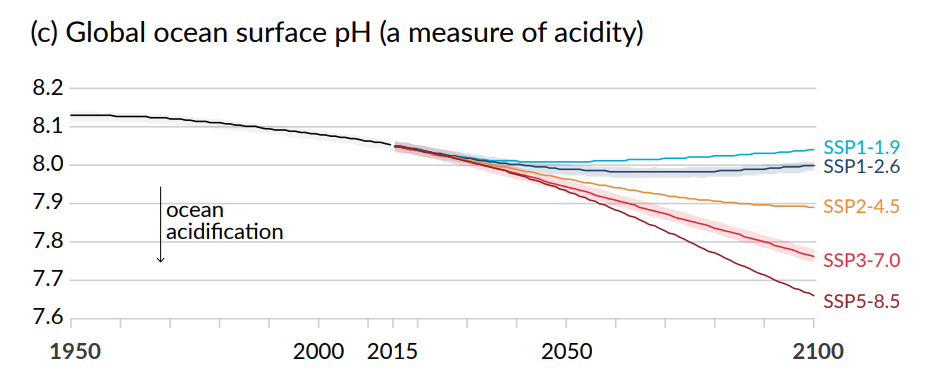
Climate change is placing increasing pressure on coral reef ecosystems in the Red Sea. Rising ocean temperatures can trigger coral bleaching, while increasing concentrations of carbon dioxide in seawater contribute to ocean acidification. Acidification reduces the availability of carbonate ions that corals need to build and maintain their skeletons.
“Climate change is placing increasing pressure on coral reef ecosystems in the Red Sea. Rising ocean temperatures can trigger coral bleaching, while increasing concentrations of carbon dioxide in seawater contribute to ocean acidification.”
The Red Sea’s corals are known for their relatively high tolerance to heat. However, thermal resilience does not make reefs immune to prolonged or repeated warming. Research shows that more frequent bleaching events can reduce the capacity of coral communities to recover, particularly when other local pressures are present.
A 2024 study of Red Sea coral communities documented substantial changes following a mass bleaching event. At the study sites, hard-coral cover declined sharply after bleaching, with limited recovery observed over the following years. The researchers noted that repeated bleaching could further challenge the recovery of Red Sea reefs.
Climate change is not the only pressure. Coastal development, pollution, tourism and other human activities can add local stress to reef ecosystems. The combination of rising temperatures and local pressures can affect coral cover, biodiversity and the ecological functions that reefs provide.
For countries bordering the Red Sea, these changes also have economic implications. Coral reefs support fisheries, tourism and coastal ecosystems. Maintaining their condition therefore depends not only on reducing climate-related pressures but also on managing local sources of environmental stress.
Coral Bleaching: When Rising Heat Turns Reefs White
Coral bleaching is one of the most visible effects of marine heat stress. When water temperatures become unusually high, corals can expel the microscopic algae, known as zooxanthellae, that live within their tissues. These algae provide much of the energy corals need through photosynthesis and give many corals their characteristic colour.
Bleaching does not necessarily mean that a coral has died. If temperatures return to normal and the stress is limited, corals can recover and regain their symbiotic algae. However, prolonged or repeated heat stress can reduce their energy reserves, slow growth and reproduction, and increase the risk of mortality.
“Prolonged or repeated heat stress can reduce their energy reserves, slow growth and reproduction, and increase the risk of mortality.”
Red Sea corals are known for their relatively high tolerance to elevated temperatures. This resilience has made the region an important focus of coral research. However, thermal tolerance does not eliminate the effects of prolonged heat stress. Repeated bleaching can still affect coral health and recovery.
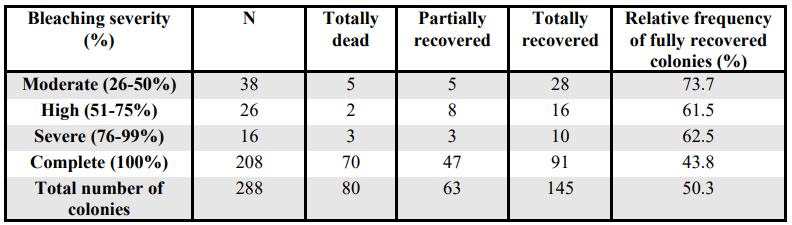
Evidence from Egypt illustrates this difference in recovery. A study of 288 coral colonies affected by a 2023 bleaching event in southern Egypt found that 50% of the colonies fully recovered, while 28% experienced severe impacts and total mortality. Recovery also varied with bleaching severity. Among moderately bleached colonies, 74% recovered fully, compared with 44% of colonies that experienced complete bleaching.
These findings suggest that the Red Sea’s natural thermal resilience has limits. As marine heatwaves become more frequent or prolonged, the ability of coral colonies to recover between bleaching events could become increasingly important for the long-term health of Red Sea reefs.
Ocean Acidification: The Hidden Threat to Red Sea Reefs
Not all threats to coral reefs are visible. Ocean acidification is a gradual change in seawater chemistry driven mainly by rising atmospheric carbon dioxide (CO₂) concentrations.
When CO₂ dissolves in seawater, it reacts with water to form carbonic acid. This process increases the concentration of hydrogen ions and lowers seawater pH. It also reduces the availability of carbonate ions, which many marine organisms need to build calcium carbonate structures.
Corals rely on carbonate ions to form and maintain their skeletons. As carbonate availability decreases, calcifying organisms can face greater difficulty building and maintaining these structures. The effects vary among species and depend on factors including the level and duration of acidification and other environmental stresses.
The Intergovernmental Panel on Climate Change (IPCC) has identified ocean acidification as a consequence of increasing atmospheric CO₂. Its Sixth Assessment Report states that continued CO₂ emissions will further increase ocean acidification, with the strongest changes occurring under higher-emissions scenarios.
Ocean acidification does not occur in isolation. Rising temperatures, marine heatwaves, pollution and other local pressures can act alongside changes in seawater chemistry. For coral reefs, the combination can affect calcification, growth and recovery.
“Ocean acidification does not occur in isolation. Rising temperatures, marine heatwaves, pollution and other local pressures can act alongside changes in seawater chemistry. For coral reefs, the combination can affect calcification, growth and recovery.”
For the Red Sea, where coral reefs support biodiversity and coastal economies, changes in ocean chemistry represent an additional long-term pressure. Reducing CO₂ emissions remains the primary way to limit the progression of human-driven ocean acidification, while local conservation measures can help reduce other stresses on reef ecosystems.
Overtourism: When Tourism Pressures the Reefs
Egypt, like many countries in the MENA region, relies on tourism as an important source of foreign currency, economic activity and employment. In 2019, Egypt recorded around 13 million tourist arrivals, followed by approximately 12 million in 2022. The country’s natural environment is an important part of this tourism economy, with visitors increasingly drawn to biodiversity and nature-based experiences.
The Red Sea is particularly important for marine tourism. Activities such as scuba diving, snorkelling and boating provide economic opportunities but can also place physical pressure on coral reefs. Direct contact with corals, boat anchoring and poorly managed recreational activities can damage fragile reef structures.
Waste from boats, hotels and coastal resorts can add further pressure when it is improperly managed. Increased tourism can also raise demand for water, energy and coastal infrastructure, while poorly planned development may contribute to habitat loss and other environmental pressures.
This creates a challenge for Egypt’s tourism sector: the natural ecosystems that attract visitors can also be affected by the activities and infrastructure associated with tourism. Managing visitor numbers, waste, coastal development and recreational activities is therefore important for maintaining the ecological condition of the Red Sea while sustaining its tourism economy.
What Is the Egyptian Red Sea Initiative (ERSI)?
The Egyptian Red Sea Initiative (ERSI) is a coral reef conservation and sustainable blue-economy programme led by the Government of Egypt and implemented with the United Nations Development Programme (UNDP), with support from the Global Fund for Coral Reefs (GFCR).
The initiative aims to reduce the drivers of coral reef degradation while developing new financing mechanisms for reef-positive businesses and livelihoods. Its implementation period runs from 27 September 2024 to 1 September 2030.
“The initiative aims to reduce the drivers of coral reef degradation while developing new financing mechanisms for reef-positive businesses and livelihoods. Its implementation period runs from 27 September 2024 to 1 September 2030.”
ERSI is part of the GFCR, a multilateral financing mechanism that supports coral reef conservation and sustainable economic activities. The programme combines conservation measures with financial mechanisms designed to support reef-positive businesses, community livelihoods and marine protected areas. It also seeks to establish the Egyptian Fund for Coral Reefs (EFCR) as a longer-term financing mechanism for reef conservation.
The initiative focuses on three priority reef areas: Wadi El-Gemal-Hamata National Park, the Northern Red Sea Islands Protectorate and the Brothers Islands. These sites are already within Egypt’s protected-area system and involve management by the Egyptian Environmental Affairs Agency (EEAA).
The programme is structured around three stages: initial implementation, consolidation and growth. Its planned activities include strengthening marine protected-area management, improving reef monitoring, developing sustainable tourism and fisheries models, improving waste management, and establishing financing mechanisms for reef conservation.
HEPCA, the Hurghada Environmental Protection and Conservation Association, is also listed among ERSI’s implementing partners. The Egyptian NGO has worked on marine conservation in the Red Sea since its establishment in 1992 and has been involved in conservation initiatives alongside government and international partners.
ERSI therefore links coral reef conservation with tourism, fisheries, waste management and sustainable finance. Its longer-term objective is to create financing and management mechanisms that can continue supporting reef conservation beyond the programme period.
International Actors and COP27
COP27, the 27th Conference of the Parties to the United Nations Framework Convention on Climate Change (UNFCCC), was held in Sharm el-Sheikh, Egypt, from 6 to 20 November 2022. The conference brought countries together to advance implementation of the Paris Agreement and address global climate action, including mitigation, adaptation and climate finance.
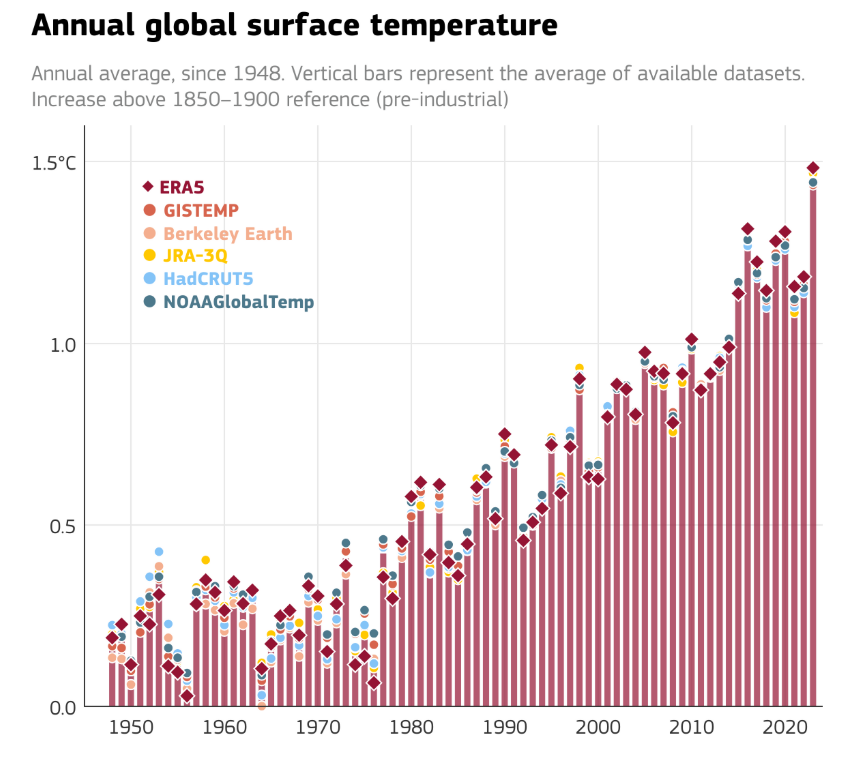
One of the key outcomes was the Sharm el-Sheikh Implementation Plan, which reaffirmed the Paris Agreement’s goal of limiting the increase in global average temperature to well below 2°C above pre-industrial levels while pursuing efforts to limit warming to 1.5°C. COP27 also called on countries to strengthen their 2030 climate targets in line with this goal.
These international commitments provide a broader policy context for national initiatives such as Egypt’s environmental and climate programmes. However, COP decisions should not be confused with Egypt’s own development strategy.
Egypt Vision 2030 is a separate national framework, first launched in 2016 and subsequently updated by the Egyptian government. The updated vision identifies sustainability as one of its guiding principles and promotes more efficient resource use, lower-emission economic growth, sustainable production and consumption, and biodiversity protection.
The implementation of climate commitments also depends on national action. Under the Paris Agreement, countries are required to prepare and communicate successive nationally determined contributions (NDCs), outlining their intended efforts to reduce emissions and adapt to climate change. While the Paris Agreement itself is a legally binding international treaty, the specific national targets contained in NDCs are nationally determined.
The 1.5°C Threshold and Coral Reefs
Limiting global warming to 1.5°C above pre-industrial levels is particularly relevant to marine ecosystems. The threshold refers to the global average temperature, rather than a specific limit for ocean temperatures.
The IPCC has found that limiting warming to 1.5°C rather than 2°C would reduce increases in ocean temperature and acidification and lower risks to marine biodiversity and ecosystems. Coral reefs are particularly vulnerable: the IPCC projects that coral reefs could decline by a further 70–90% at 1.5°C of global warming, with losses exceeding 99% at 2°C.
“The IPCC has found that limiting warming to 1.5°C rather than 2°C would reduce increases in ocean temperature and acidification and lower risks to marine biodiversity and ecosystems.”
For the Red Sea, this global temperature pathway provides important context. While Red Sea corals have demonstrated relatively high thermal tolerance, continued warming and more frequent marine heatwaves can increase pressure on reef ecosystems. Global efforts to limit warming therefore complement local measures aimed at reducing pollution, managing tourism and protecting coral habitats.
Credit: ECMWF.
A Blue World: Promoting Sustainable Tourism
Climate change has increased the focus on how economic sectors can reduce environmental pressures while supporting livelihoods. Within this context, the blue economy approach links economic activity in marine and coastal areas with the conservation and sustainable use of ocean resources.
For Egypt’s Red Sea region, the approach places particular emphasis on sustainable tourism. Its proposed framework for ecotourism is built around four main pillars:
- Aligning ecotourism with marine conservation and biodiversity protection
- Diversifying ecotourism activities and improving existing infrastructure
- Using ecotourism to strengthen climate resilience
- Supporting local communities and preserving cultural heritage
The framework seeks to connect tourism development with environmental management rather than treating them as separate objectives. This is particularly relevant to Egypt, where tourism is an important component of the national economy and where the Red Sea’s marine ecosystems are a major attraction for visitors.
Egypt’s tourism strategy identifies the sector as a key contributor to the national economy and places emphasis on maintaining the country’s position as an international tourism destination. Within the Red Sea Initiative, this approach includes measures related to sustainable tourism, fisheries and reef-positive businesses. The objective is to reduce pressures on marine ecosystems while creating economic opportunities for communities that depend on them.
The relationship between environmental quality and tourism is also relevant to destination management. Degraded habitats can reduce the attractiveness of nature-based destinations, while poorly managed tourism can place additional pressure on the ecosystems that draw visitors. Measures such as regulating tourism activities, improving waste management and supporting sustainable fishing can therefore form part of a broader strategy for managing these pressures.
The Red Sea Initiative cannot address climate change on its own. Its focus is narrower: protecting coral reefs and strengthening the economic and institutional systems that depend on them. Coral reefs support a wide range of marine species and provide important ecosystem services, including fisheries and tourism. Their long-term condition will depend on both local conservation measures and broader efforts to limit global warming.
For Egypt, the challenge is therefore to balance continued tourism development with the protection of the marine ecosystems on which part of that economy depends.
Copyright © 2026 Blue Arabi. All rights reserved.