As global temperatures rise, demand for cooling is putting growing pressure on energy systems. Modern buildings often rely heavily on energy-intensive air conditioning, while traditional architecture offers passive ways to manage heat. From windcatchers to shaded screens and hybrid ventilation, these climate-responsive approaches are being reconsidered as the construction sector looks for lower-energy alternatives.
Why Extreme Heat Is Becoming a Public Health Crisis
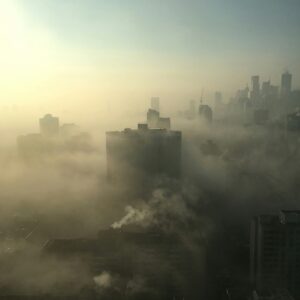
Extreme heat is placing growing pressure on public health and infrastructure across the Middle East and North Africa (MENA). The region has experienced more frequent and intense heatwaves, alongside droughts and episodes of heavy rainfall. 2024 was the warmest year on record globally, and several countries in the region recorded temperatures above 50°C.
“2024 was the warmest year on record globally, and several countries in the region recorded temperatures above 50°C.”
These conditions have significant health and economic consequences. According to the World Meteorological Organization (WMO), extreme weather events in the Arab region caused more than 300 deaths in 2024, mainly during heatwaves and floods. Rising temperatures also increase risks to water and food security, particularly in areas already facing resource shortages.
“According to the World Meteorological Organization (WMO), extreme weather events in the Arab region caused more than 300 deaths in 2024, mainly during heatwaves and floods.”
Extreme heat creates additional pressure on energy systems. As temperatures rise, demand for air conditioning and cooling increases. This can place additional stress on electricity networks and contribute to higher energy demand and the risk of power disruptions. These challenges can be particularly acute in areas affected by conflict or damaged infrastructure.
The energy sector also has an environmental cost. Much of the region’s electricity generation still relies on fossil fuels, which are major sources of greenhouse gas emissions. Power generation can also require significant amounts of water, creating additional pressure in one of the world’s most water-stressed regions.
Buildings are another part of the challenge. Conventional construction can rely heavily on energy-intensive cooling, while inefficient building design can increase indoor temperatures and electricity demand. As populations and cities grow, these pressures are becoming more significant.
These challenges have increased interest in alternatives that can reduce reliance on mechanical cooling. Passive architecture uses building design, orientation, shading, ventilation and locally adapted materials to regulate indoor temperatures with less energy. For a region facing rising temperatures and water and energy constraints, traditional climate-responsive architecture is therefore receiving renewed attention.
The Architecture of Staying Cool
Climate-adaptive architecture is not a modern concept. Before electricity and mechanical air conditioning, communities across the MENA region developed building techniques adapted to local climate conditions. These designs often used locally available materials and relied on features such as courtyards, thick walls, shaded spaces and narrow streets to reduce heat and improve natural ventilation.
Many of these elements can influence the microclimate around and inside buildings. Courtyards can provide shaded areas and support air circulation, while thick walls can slow the transfer of heat into interior spaces. Narrow streets can also reduce direct solar exposure and create shaded pedestrian areas.
These approaches are part of passive design, which uses natural conditions such as wind, shade and thermal mass to improve indoor comfort while reducing reliance on mechanical energy.
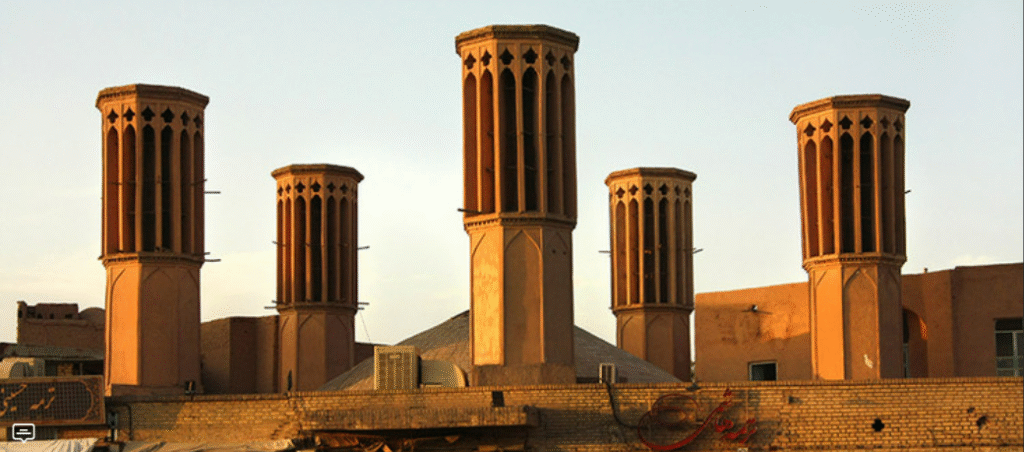
One of the best-known examples is the malqaf, a traditional wind-catcher used in parts of the Middle East, including Egypt. The structure typically consists of an elevated opening connected to a vertical shaft. Positioned above the building, it captures air currents and directs them downward into the interior.
The design takes advantage of prevailing wind conditions to increase natural ventilation. In traditional Egyptian architecture, malqafs were often oriented according to local wind patterns, including winds from the north. Their use illustrates how building design could respond directly to local climate conditions without relying on electricity-powered cooling.
Today, these traditional techniques are attracting renewed interest as architects and researchers examine ways to reduce energy demand and improve thermal comfort in hot climates.
Understanding Modern Design Practices
In many ways, 20th-century modernist architecture reshaped global design practices. Characterized by minimalism, geometric forms, and an emphasis on efficiency, the movement promoted the standardization of architectural forms and construction methods. However, this approach has often prioritized uniformity, aesthetics, and rapid construction over the environmental conditions of individual places.
The growing reliance on materials such as steel and concrete has also contributed significantly to the environmental footprint of the built environment. Today, the construction sector accounts for approximately 32 per cent of global energy consumption and 34 per cent of global carbon dioxide emissions. Against this backdrop, sustainable building strategies cannot be universally applied as a single model; they need to respond to local climates, materials, and environmental conditions.
“Sustainable building strategies cannot be universally applied as a single model; they need to respond to local climates, materials, and environmental conditions.”
Reconsidering historical climate-adaptive practices can therefore offer valuable lessons for the future of architecture. Rather than pursuing aesthetic homogeneity, a climate-adaptive approach would prioritize the standardization of environmentally responsible principles while allowing architectural solutions to remain locally specific. This means drawing on traditional knowledge and techniques that evolved in response to local climates and often rely on locally available materials, passive cooling and heating, and lower-energy construction methods.
Integrating such knowledge into contemporary design does not necessarily mean returning to the past. Instead, it offers an opportunity to combine traditional climate intelligence with modern technologies and building practices to create architecture that is both environmentally responsive and suited to contemporary needs.
Cooling Demand Is Rising
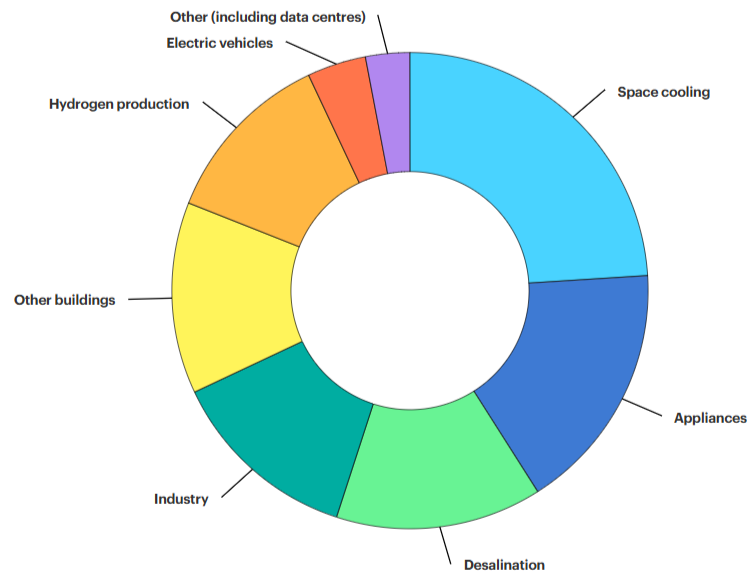
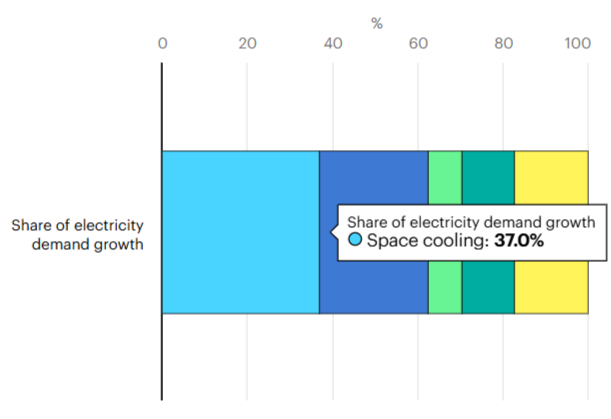
Air conditioning and electric fans already account for around 10% of global electricity consumption, according to the International Energy Agency (IEA). As temperatures rise and access to cooling expands, demand for electricity is expected to increase further. The IEA projects that, without stronger efficiency measures, global energy demand for space cooling could more than double by 2050.
A study of traditional houses in Mosul, Iraq, argues that some modern building practices can increase energy use and reduce the economic efficiency of buildings. The researchers describe the fragmentation of building systems as contributing to higher energy consumption and the need for additional spaces.
At the same time, gaps between energy supply and demand can limit access to cooling, particularly for lower-income households. Rising energy costs can further increase this disparity. In areas exposed to extreme heat, limited access to adequate cooling and infrastructure can increase residents’ vulnerability to heat-related health risks.
Revisiting Traditional Passive Design
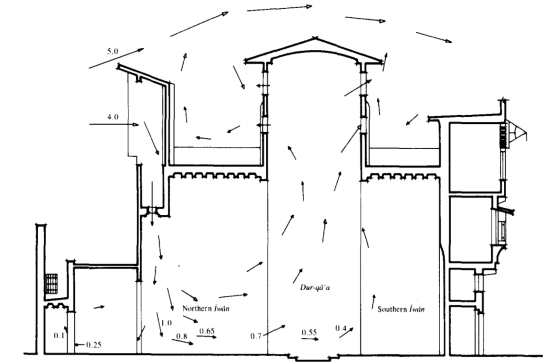
Rethinking the relationship between buildings and their surrounding environment is increasingly relevant to climate-responsive design. Traditional passive techniques, such as the malqaf (windcatcher), can be incorporated into contemporary buildings to support natural ventilation and reduce reliance on mechanical cooling.
The malqaf uses differences in wind pressure and temperature to direct outdoor air into a building. This can improve air circulation and, under suitable conditions, contribute to thermal comfort while reducing the need for mechanical ventilation and cooling. Its effectiveness, however, depends on factors such as wind conditions, building orientation, air quality, and seasonal changes.
“The malqaf uses differences in wind pressure and temperature to direct outdoor air into a building. This can improve air circulation and, under suitable conditions, contribute to thermal comfort while reducing the need for mechanical ventilation and cooling.”
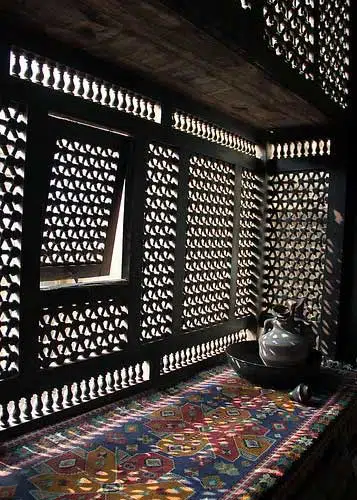
Other traditional features, including the mashrabiya, combine shading with ventilation. Their perforated screens can reduce direct solar exposure while allowing air to circulate. In traditional courtyard houses across parts of the Middle East and North Africa, such elements were often adapted to local sun, wind, and climatic conditions.
These approaches illustrate how traditional architectural knowledge can inform contemporary climate-responsive design. Rather than replacing modern systems, passive strategies can complement them by reducing cooling demand and adapting buildings more closely to local environmental conditions.
Hybrid ventilation combines natural ventilation with mechanical systems. Research suggests that, depending on climate and system design, it can reduce the energy required for cooling. One review reported potential energy savings of up to 60–70% in temperate climates, around 50% in hot and arid climates, and approximately 28% in warm and humid climates.
Hybrid systems can also be adapted to seasonal changes by allowing buildings to switch between natural and mechanical ventilation when conditions require it. Interest in these systems has increased in recent years, although their wider adoption remains limited.
In countries such as Morocco, hybrid approaches are also being discussed in the context of energy affordability. Lower energy demand can reduce operating costs, although the initial cost of installing and maintaining hybrid systems can remain a barrier for lower-income households. Research has also found differences in energy performance and thermal comfort depending on climate, building design, and system configuration.
Designing for Local Climate
There is no single approach to climate-responsive architecture. Building design needs to account for local climate, materials, energy availability, and patterns of use. Traditional techniques such as the malqaf and mashrabiya offer examples of how buildings in the MENA region were adapted to local environmental conditions.
Combining this knowledge with contemporary technologies could help reduce reliance on mechanical cooling where conditions allow. Such strategies may also contribute to lower building energy demand. Their effectiveness, however, depends on how they are designed and adapted to specific locations.
As cooling demand and energy use continue to grow, climate-responsive design is becoming an increasingly important consideration for the construction sector. Rather than relying on a single solution, integrating passive, mechanical, and hybrid approaches can provide different options for managing indoor temperatures and energy use.
Copyright © 2026 Blue Arabi. All rights reserved.